
Why Two 916 Gold Pieces Can Look Different in Colour
A 916 gold colour difference between two pieces is rarely a purity problem. The other 8.4 percent, the finish and the age of the surface shift the shade.
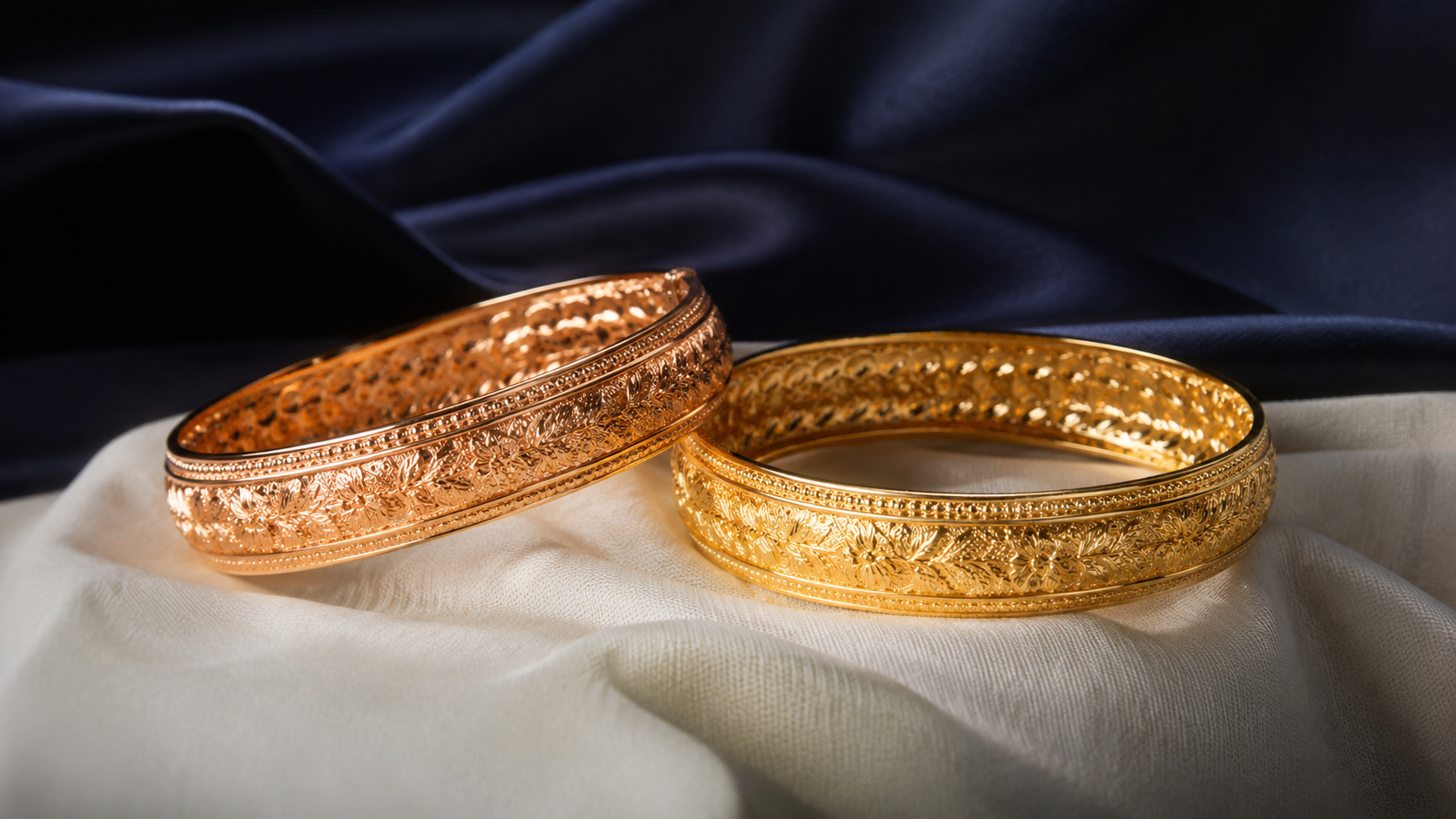
Put a bangle bought in Penang next to one bought in Kuala Lumpur, both stamped 916, and one may look noticeably richer or paler than the other. The first reaction is usually suspicion. A 916 gold colour difference is, however, almost always explained by things that have nothing to do with how much gold is in the piece.
916 means 91.6 percent gold by weight. That leaves 8.4 percent for the goldsmith to choose, and the choice shows.
The alloy is the main reason
Pure gold is too soft for daily wear, so it is alloyed. In 916 the usual partners are copper and silver, in varying proportions.
More copper pushes the colour warmer and redder. This is the deeper, almost orange-yellow that some traditional pieces show.
More silver pushes it paler and slightly greener. The piece reads as a lighter, brighter yellow.
A balance of the two gives the classic 916 yellow most people picture.
Every manufacturer has a house recipe within the 916 limit. The gold content is identical; the 8.4 percent is not. Two honest pieces from two workshops will differ, and nobody has cheated.
Surface finish changes perceived colour
High polish reflects light in a mirror-like way and reads brighter, sometimes paler.
Matte or sandblast scatters light and reads deeper and warmer.
Textured or hammered surfaces mix both, and shift with the angle of view.
The same alloy in three finishes will look like three colours on a counter, and the difference is entirely optical.
Surface enrichment
Traditional goldsmiths sometimes finish a piece by treating the surface so that a thin layer near the outside is richer in gold than the body. Techniques vary, but the effect is a deeper, more saturated colour on the outer skin. Over years of wear the skin polishes back to the underlying alloy, and the piece appears to "fade". It has not lost purity. It has lost a very thin cosmetic layer.
Age and handling
Skin and sweat leave a film that dulls the surface and warms the tone. In Malaysian humidity this builds quickly.
Micro-scratches from years of wear scatter light and soften the colour.
Copper tarnish. Copper-rich 916 can darken very slightly at the surface over time, particularly on pieces stored in humid conditions without cleaning. A gentle professional polish restores it.
A new piece next to a decade-old one of identical alloy will not match, and a clean and polish usually closes most of the gap.
Lighting in the shop
Gold shops light their displays warm on purpose. Take a piece to the door and the colour changes. Comparing a piece seen under shop lights to one seen at home in daylight is not a fair comparison.
When colour is a genuine warning
A piece that is much paler than any 916 you have seen, particularly with a greenish or whitish cast, may be a lower karat mis-stamped or unmarked. Test it.
A piece that has changed colour at wear points only, showing a different metal underneath, is plated.
A piece that reacts to a magnet is not solid gold.
None of these is a colour difference between two honest 916 pieces. They are signs that one of the pieces is not what it claims.
The practical answer
If two 916 pieces differ in shade and both carry clear hallmarks from reputable sources, accept it as alloy and finish. If you want a matching set, buy the pieces together from the same maker, and ask for the same alloy and finish on any future additions. A bespoke jeweller can match an existing piece by testing it and adjusting the alloy, which is the only reliable way to make new gold sit beside old gold without a visible seam.
Book a complimentary design consultation at the C'Garden atelier, The MET Corporate Towers, Kuala Lumpur: 010-766 7448 · hq@cgarden.com.my
C'Garden is an independent bespoke jeweller in Kuala Lumpur. We are not affiliated with, endorsed by, sponsored by or certified by any organisation, laboratory or brand named in this article. Third-party names are used only to refer factually to those organisations and their published standards. All text and imagery in this article is original work created by C'Garden.
Reference
World Gold Council. (n.d.). About gold. World Gold Council. https://www.gold.org/about-gold
All journal entries