
Why Malaysia Buys 916 When the West Buys 750
The same shop sells both. One is chosen for value and the other for durability, and the right answer depends entirely on what the piece has to survive.
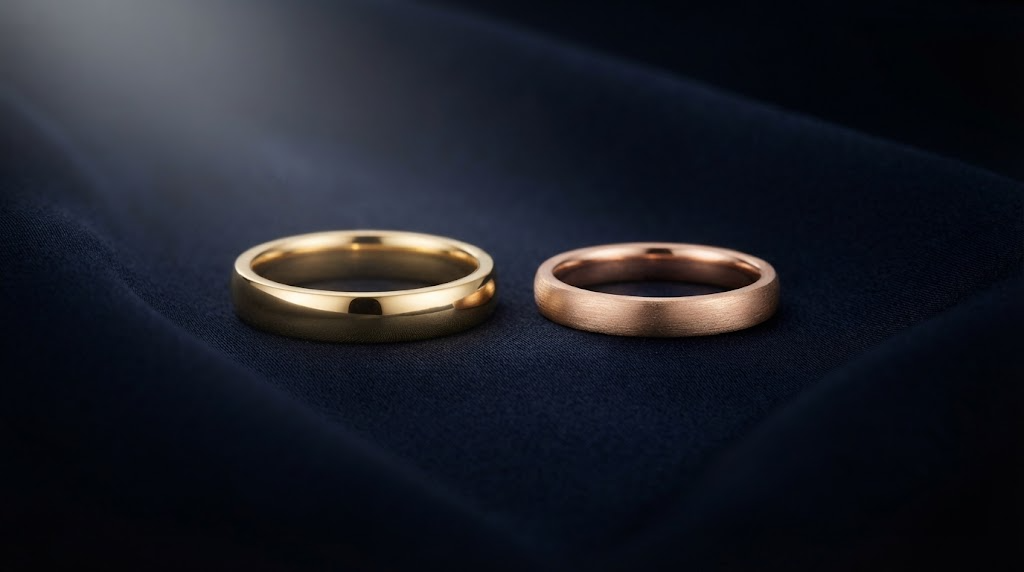
Walk into a jeweller in Kuala Lumpur and 916 dominates. Walk into one in London or New York and 750 does. Neither market is confused. They are optimising for different things.
What the numbers mean
The three-digit numbers are parts per thousand of pure gold.
- 999: 99.9% gold. Essentially pure. "24k".
- 916: 91.6% gold. "22k".
- 750: 75% gold. "18k".
- 585: 58.5% gold. "14k".
The remainder is other metals, copper, silver, zinc, palladium, and they are not filler. They do most of the work.
What the alloy actually does
It makes gold hard enough to be jewellery. Pure gold is soft enough to mark with a fingernail. A 999 ring worn daily deforms and scratches visibly within months.
It sets the colour. More copper gives rose. Palladium or nickel with rhodium plating gives white. The yellow of 916 is deeper than the yellow of 750 because there is more gold in it.
It determines how well it holds a stone. Prongs in 22k are noticeably softer than prongs in 18k. For a piece where small stones must be gripped securely for decades, that matters.
Why the Malaysian preference is rational
Value is legible. At 91.6% purity, most of what you pay for is gold you can weigh. The metal is a large share of the price, and its worth is calculable.
Resale is straightforward. A well-established buy-back market prices by weight and fineness.
The colour is the point. In a market where gold is culturally significant, the rich yellow of high-carat gold is not interchangeable with the paler yellow of 18k.
Why the Western preference is also rational
Durability first. Where jewellery is bought to wear rather than to hold value, hardness wins.
Design freedom. Fine detail, sharp edges, delicate settings and secure pavé are all easier in 18k.
Resale is not the point. In markets with no strong gold buy-back culture, purity buys nothing at the point of sale.
How to choose, piece by piece
Buy 916 for: bangles, chains worn occasionally, ceremonial and wedding pieces, anything bought partly as a store of value.
Buy 750 for: engagement rings, everyday rings, anything with small set stones, anything with fine detail that must stay crisp.
Buy 999 for: value storage. Bars and coins, not jewellery you intend to wear hard.
The honest summary
For a ring worn every day for the rest of someone's life, 18k is the better engineering choice, and we will say so even though it means selling less gold by weight.
For a bangle that will be worn to weddings and passed on, 916 is the better cultural and financial choice.
Both can be right in the same jewellery box.
Book a complimentary design consultation at the C'Garden atelier, The MET Corporate Towers, Kuala Lumpur: 010-766 7448 · hq@cgarden.com.my
C'Garden is an independent bespoke jeweller in Kuala Lumpur. We are not affiliated with, endorsed by, sponsored by or certified by any organisation, laboratory or brand named in this article. Third-party names are used only to refer factually to those organisations and their published standards. All text and imagery in this article is original work created by C'Garden.
Reference
World Gold Council. (2026). Jewellery: Gold demand trends full year 2025. World Gold Council. https://www.gold.org/goldhub/research/gold-demand-trends/gold-demand-trends-full-year-2025/jewellery
All journal entries