
Why Gold Jewellery Sometimes Turns Skin Green
When gold jewellery turns skin green, it is chemistry rather than fake gold. Why copper in the alloy reacts, why humidity makes it worse, what stops it.
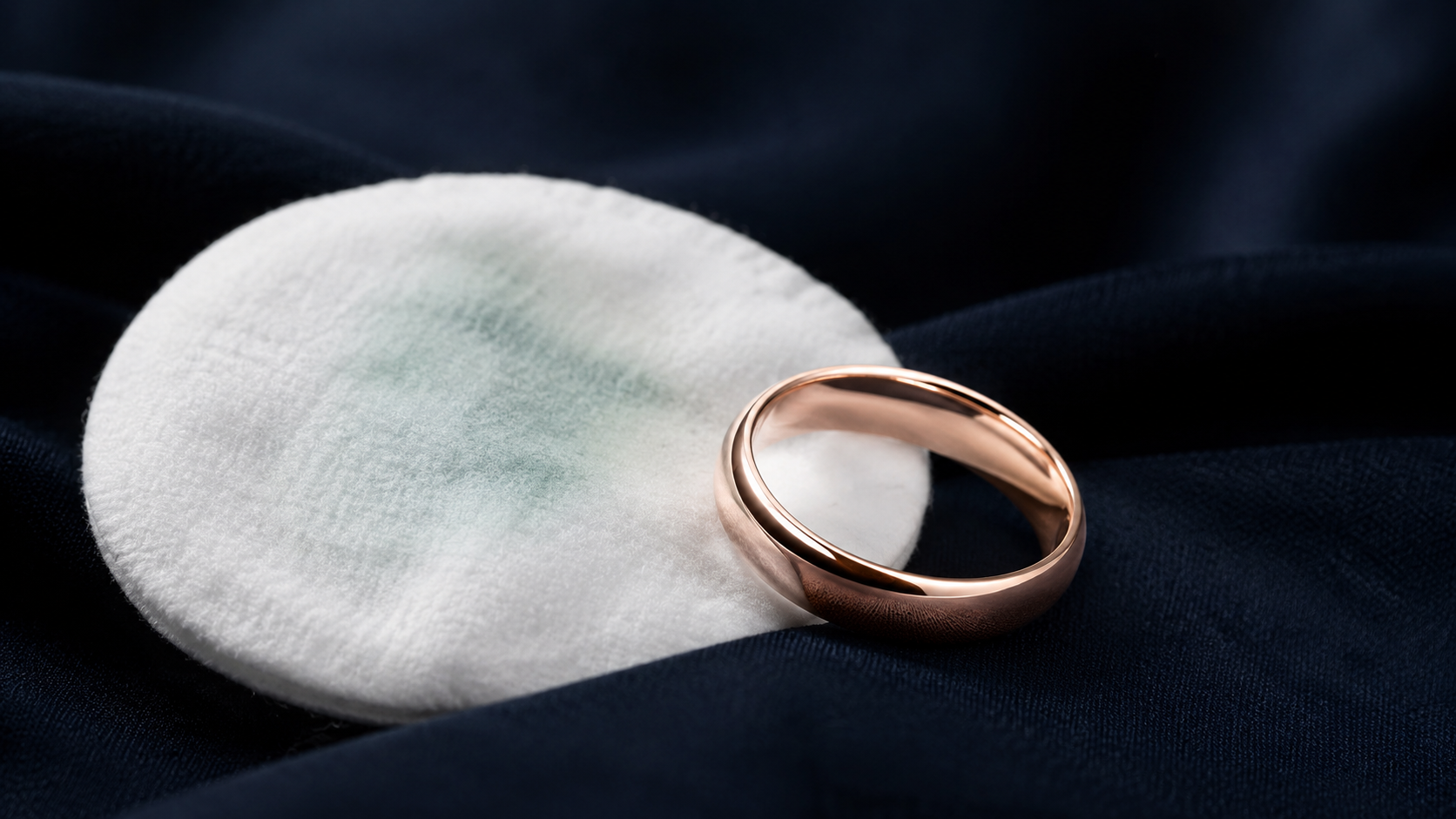
A green mark under a ring is one of the most common jewellery complaints, and the usual conclusion is that the gold must be fake. Sometimes it is. Often it is not. Real gold jewellery turns skin green under the right conditions, and the conditions in Kuala Lumpur are very much the right ones.
The chemistry
Pure gold does not react with skin. It does not react with much of anything, which is why it is valued. But almost no jewellery is pure gold; it is alloyed with other metals for strength and colour, and the alloy metals are not so inert.
Copper is the main culprit. It reacts with the acids in sweat, with the salts in seawater and sweat, and with many cosmetics, forming green and blue-green copper compounds. Those compounds rub off onto skin. Silver in the alloy can add a dark grey or black smudge through the same process, forming silver sulphide.
The green is a stain, not a rash. It washes off with soap and water and does not damage skin. That distinguishes it from a true metal allergy, which causes redness, itching and small blisters, and is almost always a reaction to nickel rather than to copper or gold.
Why gold jewellery turns skin green from some pieces and not others
Lower karat. The less gold in the alloy, the more copper and silver. Nine and ten karat pieces mark skin far more readily than 18k, and plated brass does it fastest of all, because brass is mostly copper.
Rose gold. Its pink colour comes from a high copper content, so even 18k rose gold marks some wearers, particularly under a snug band.
Plating. A gold-plated piece is a base metal with a thin skin of gold. Once the plating wears through at the contact points, the base metal is against the skin and the green follows.
Tight fit. A ring that traps sweat underneath creates a small, warm, acidic pocket where the reaction happens fastest.
Why it is worse here
Humidity and heat mean skin is rarely dry. Sweat sits under rings and bracelets for hours. Sunscreen, hand sanitiser and moisturiser are used constantly and several of them are mildly acidic or contain chlorides. Pool chlorine and sea water both accelerate copper corrosion. A ring that never marks its owner in a cool, dry climate can begin to do so within days of arriving in Malaysia.
Individual chemistry matters too. Some people have more acidic sweat than others, and they will mark with pieces that give their friends no trouble at all.
What actually helps
Higher karat. Moving from 9k or 14k to 18k reduces the copper content substantially. 22k almost never marks.
Different alloys. White gold alloyed with palladium rather than nickel, and platinum, are the most inert options for stone-set pieces. Palladium white gold contains little copper and does not need constant replating to stay kind to skin.
Take it off. Remove rings before washing hands, applying lotion or sanitiser, swimming and exercise. Dry the skin and the ring before putting it back on.
Clean it. A ring with a film of old lotion and sweat underneath reacts faster. Warm water, a drop of washing-up liquid and a soft brush once a week is enough.
Fit. A band that allows a little air underneath marks less than one that seals against the finger.
Barrier coatings. Clear nail varnish on the inside of a ring is a common tip. It works for a few days, wears off unevenly and looks poor; it is a stopgap, not a solution.
When to worry
If the mark is accompanied by itching, redness or blistering, the problem is likely nickel and the piece should not be worn. If a piece described as solid gold turns skin green within days despite being cleaned and fitted properly, it may be plated or of a lower karat than stated, and the stamp should be checked. Otherwise, a faint green mark under a rose gold ring in September in Kuala Lumpur is simply what copper does, and the cure is a better alloy or a slightly different habit.
Book a complimentary design consultation at the C'Garden atelier, The MET Corporate Towers, Kuala Lumpur: 010-766 7448 · hq@cgarden.com.my
C'Garden is an independent bespoke jeweller in Kuala Lumpur. We are not affiliated with, endorsed by, sponsored by or certified by any organisation, laboratory or brand named in this article. Third-party names are used only to refer factually to those organisations and their published standards. All text and imagery in this article is original work created by C'Garden.
Reference
Jewelers of America. (n.d.). Jewelry care. Jewelers of America. https://www.jewelers.org/buying-jewelry/jewelry-repair-and-care/jewelry-care
All journal entries