
Why Bespoke Jewellers Prefer 18k (750) Gold
Most 18k gold jewellery Malaysia buyers see is made that way for a reason. What 750 means, how the alloy behaves at the bench, and why 916 suits others.
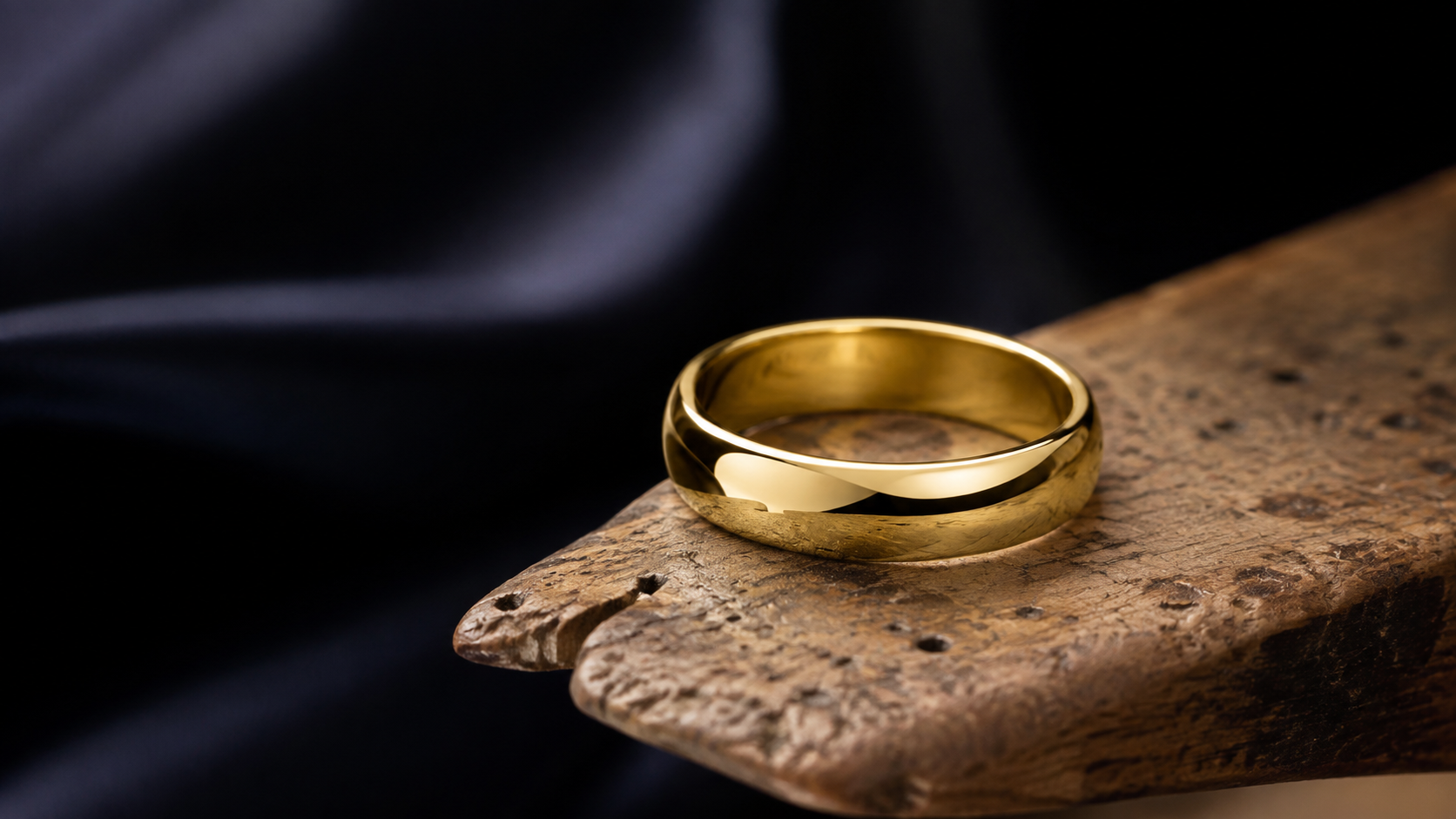
Walk into a traditional goldsmith in Kuala Lumpur and most of the stock is 916. Walk into a bespoke atelier and almost everything is 750. The 18k gold jewellery Malaysia buyers find at the bespoke end is not a compromise on purity for the sake of cost. It is a choice about what the metal has to do, and it is the same choice made by fine jewellers in most of the world.
What the numbers mean
Gold purity is expressed either in karats out of twenty-four or in parts per thousand. Pure gold is 24k, or 999. Twenty-two karat is 916, meaning 91.6 percent gold. Eighteen karat is 750, three quarters gold by weight, with the remaining quarter made up of other metals.
That remaining quarter is the point. Pure gold is soft enough to mark with a fingernail. Every metal added to it makes it harder, and the alloying metals also set the colour.
The alloy does the work
Yellow 18k is typically gold with silver and copper in roughly equal parts. The silver keeps the colour bright; the copper adds strength.
Rose 18k shifts the balance towards copper, which gives the pink tone and makes the alloy harder still.
White 18k replaces silver and copper with palladium, or in some alloys nickel, which bleaches the colour. Palladium white gold is the standard for fine work; nickel alloys are harder but cause skin reactions in some wearers and are restricted in several markets.
All three are substantially harder than 916, and that hardness changes what the metal can do.
18k gold jewellery Malaysia ateliers prefer, and why
Prongs hold. A prong is a thin post of metal bent over the edge of a stone. In 750 it stays where it is put. In 916 it is soft enough to be pushed open by ordinary knocks, and a diamond in a 22k prong setting is a diamond waiting to be lost. This is the main reason bespoke work with stones is done in 18k.
Fine detail survives. Milgrain edges, thin gallery rails, delicate pierced work and small pavé beads all need a metal that keeps a crisp edge. Soft gold rounds off within months.
Thin sections are possible. A slim, elegant band in 750 will keep its shape. The same band in 916 deforms into an oval on the finger.
It casts and solders cleanly. Modern 18k alloys are formulated for casting, with predictable shrinkage and good flow. That makes complex designs reliable to produce.
It polishes and stays polished. Harder alloys take a finer polish and hold it longer against everyday abrasion.
Why 916 persists
Twenty-two karat gold has a deep, rich colour that 18k cannot match, and a large share of its value sits in the metal itself, which makes it easy to price by weight and easy to trade back. For traditional pieces, bangles, chains and heavy pieces bought partly as a store of value, it remains the natural choice, and there is nothing wrong with that. It is simply the wrong metal for holding a diamond in a slender ring.
Reading the stamp
A bespoke piece in 18k should carry a 750 stamp, usually inside the shank or on the back of a pendant. Some pieces carry 18K instead. Either is correct. Platinum pieces are stamped PT950 or Pt900. If a piece described as 18k carries no mark, ask why.
What this means for a commission
When a client brings in a family piece in 916 and wants a diamond set into it, the usual advice is to keep the old gold for the parts that do not hold stones and to make the setting head in 750, soldered in. The colour match between good yellow 18k and 22k is close, and the stones are safe.
For a new commission with stones, 18k is the default, and the only real decision is the colour. For a plain band or a piece of traditional character, 22k stays on the table. Knowing which metal suits which job is most of what a jeweller is for.
Book a complimentary design consultation at the C'Garden atelier, The MET Corporate Towers, Kuala Lumpur: 010-766 7448 · hq@cgarden.com.my
C'Garden is an independent bespoke jeweller in Kuala Lumpur. We are not affiliated with, endorsed by, sponsored by or certified by any organisation, laboratory or brand named in this article. Third-party names are used only to refer factually to those organisations and their published standards. All text and imagery in this article is original work created by C'Garden.
Reference
World Gold Council. (n.d.). Gold jewellery. World Gold Council. https://www.gold.org/goldhub/gold-jewellery
All journal entries