
What a Laboratory-Grown Diamond Report Tells You
The paperwork for a lab-grown stone is deliberately different from a natural one. What the inscription proves, why the wording is changing, and the one question to ask.
If you are buying a laboratory-grown stone, the paperwork will not look like the paperwork for a natural one. That is by design, and it is in your interest.
The reports are deliberately distinct
Grading laboratories issue separate report formats for laboratory-grown diamonds so that the two can never be confused at a glance, not by a buyer, not by a valuer, not by whoever inherits the piece.
The stone itself is marked
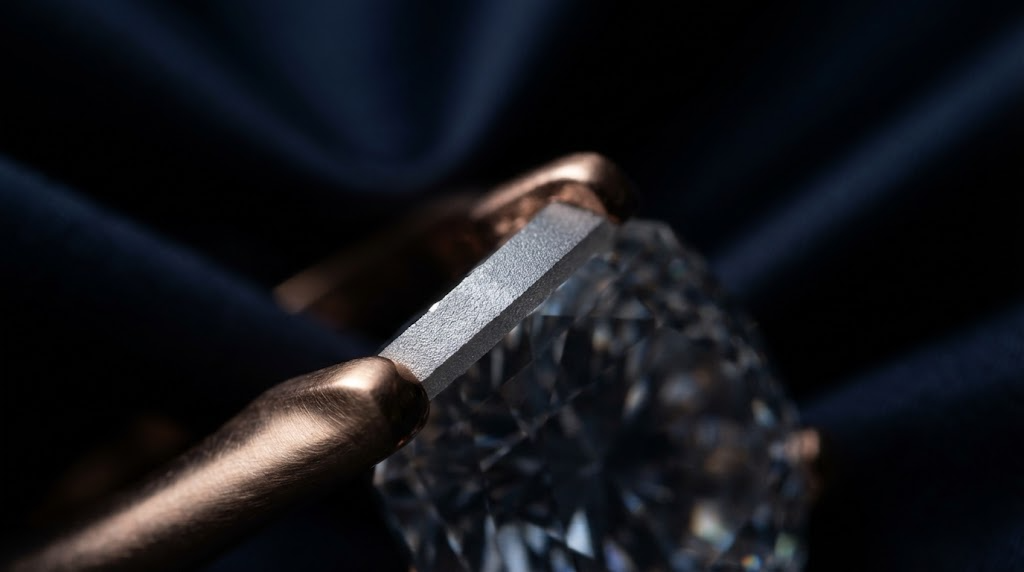
Laboratory-grown diamonds assessed by the major independent laboratories are laser-inscribed with "Laboratory-Grown" and an assessment number. The inscription sits on the girdle, is invisible to the naked eye, and is permanent.
Ask to see it. Any jeweller with a microscope can show you in under a minute, and a jeweller who declines has told you something.
Why the inscription is the part that matters
A certificate is a piece of paper. It can be photocopied, it can be swapped, and it can be presented alongside a stone it does not describe.
The inscription is on the diamond. It ties one specific stone to one specific record, permanently, in a way that no amount of paperwork can. This is why we treat "may I see the inscription" as the single most useful sentence a buyer can say.
Match three things and you are done: the number on the girdle, the number on the report, and the number in the laboratory's own online database. All three should agree. If any one of them cannot be produced, stop.
Terminology is changing
The descriptive language used for laboratory-grown stones has been diverging from the language used for natural ones, with assessments increasingly expressed in broader quality bands rather than the familiar letter and number grades.
The practical consequence: do not assume a grade on a laboratory-grown report means precisely the same thing as the same grade on a natural report. Read what the document actually says rather than pattern-matching from experience.
What "type" and growth method mean on the page
Some reports note how the stone was grown. The two commercial methods produce diamond either way, and neither is a mark of quality on its own.
What occasionally appears alongside is a note about post-growth treatment used to improve colour. This is disclosed precisely because it is worth knowing, and it is not a scandal, but it should be on the paper rather than discovered later.
If growth method or treatment appears in the comments and you do not understand it, ask before you buy rather than after. A straight answer is easy to give.
Keep the paperwork with the piece
This sounds obvious and almost nobody does it.
Photograph the report, the inscription and the invoice, and store them somewhere that is not the same drawer as the ring. Note the report number separately.
Years later, when a piece is being valued, insured, resized or passed on, that small folder is the difference between a straightforward conversation and an expensive one. It is also the only reliable way for a future owner to know what they have inherited.
The question to ask your jeweller
Not "is this real?", it is diamond, and that question wastes everyone's time.
Ask: what is the inscription, and can I see it?
That single question confirms what you are buying, ties the paper to the stone, and tells you within thirty seconds whether the person selling to you is comfortable being checked.
Book a complimentary design consultation at our Kuala Lumpur atelier: 010-766 7448 · hq@cgarden.com.my
C'Garden is an independent bespoke jeweller in Kuala Lumpur. We are not affiliated with, endorsed by, sponsored by or certified by any organisation, laboratory or brand named in this article. Third-party names are used only to refer factually to those organisations and their published standards. All text and imagery in this article is original work created by C'Garden.
Reference
Gemological Institute of America. (n.d.). Laboratory-grown diamond reports. GIA. https://www.gia.edu/lab-grown-diamond
All journal entries