
The Seven Things That Make a Pearl Valuable
Size, shape, colour, lustre, surface, nacre and matching, the seven factors that determine pearl value, and which one matters most.
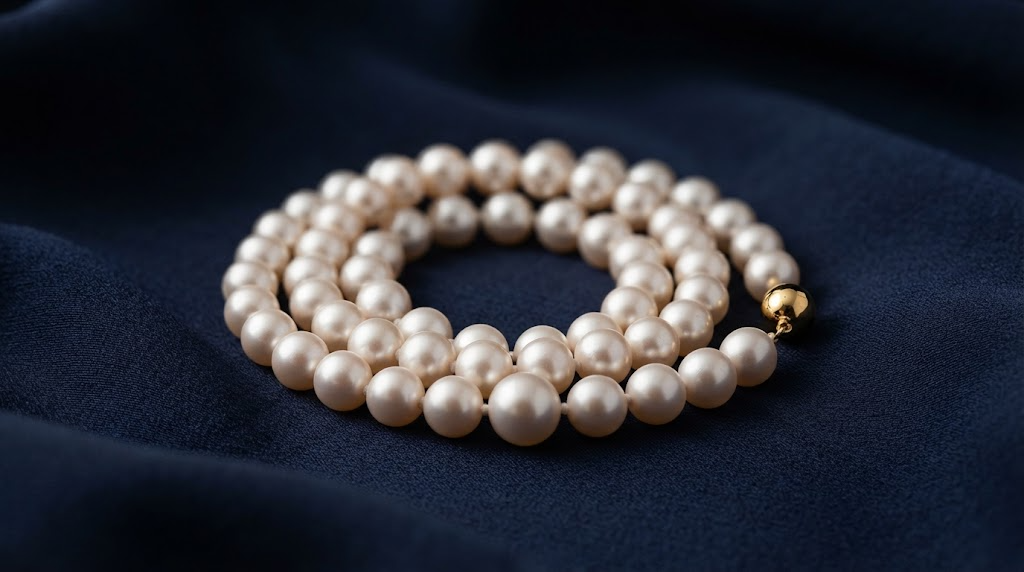
Pearls are the one category where buyers most often rely entirely on the seller, because the vocabulary is unfamiliar and the differences look subtle until they are pointed out.
They are not subtle once you know where to look.
The seven value factors
Pearl quality is assessed across seven factors: size, shape, colour, lustre, surface quality, nacre quality, and, for any piece with two or more pearls, matching.
Size. Measured in millimetres. Larger pearls take longer to grow and are less common, so price rises steeply with size.
Shape. Round is rarest and most valued. Then semi-round, button, drop, pear, oval, baroque and circled. Baroque pearls are irregular and can be beautiful and characterful at far lower cost.
Colour. Body colour plus overtone, the translucent shade lying over it. Rose overtone on white is traditionally prized.
Lustre. The most important factor, and the easiest to judge without training.
Surface quality. Blemishes, spots, wrinkles. Few pearls are perfect; the question is whether marks are visible at normal distance and whether they can be hidden by a drill hole.
Nacre quality. How thick the nacre layer is. Thin nacre looks dull and will wear through.
Matching. How well pearls agree with one another in a strand. Poor matching is immediately visible.
Lustre is where to start
Lustre is the sharpness and intensity of light reflected from the surface.
Hold the pearl under a light source and look at the reflection. On a fine pearl you should see a sharp, almost mirror-like reflection, you can nearly make out the shape of the light itself. On a poor pearl the reflection is soft, milky, diffuse.
This single test separates good from mediocre faster than anything else, and it requires no expertise.
The four main types
Akoya, from Japan, China and Vietnam. Usually cream or white, sometimes with pink or green hints. The classic round strand.
South Sea, silver, white or golden. The largest, and the most expensive.
Tahitian, naturally dark, in striking colours: aubergine, peacock green, metallic grey, greyish blue.
Freshwater, cultivated mostly in China, abundant, in a wide range of sizes, shapes and colours including pink, yellow and purple. The most affordable route into pearls.
A note on wearing them
Pearls are soft and porous. They should go on last, after perfume, hairspray and lotion, and be wiped with a soft damp cloth after wearing.
Never clean pearls in an ultrasonic cleaner, and never soak them.
Frequently asked questions
What makes a pearl expensive?
Size, roundness and lustre, above all.
How do I judge lustre?
Look at the reflection of a light. Sharp and mirror-like is good; milky is not.
Are freshwater pearls real?
Yes. Cultured, like almost all pearls sold today, but genuine pearls.
Do pearls last?
Generations, with reasonable care, but nacre can wear through if treated harshly.
Book a complimentary design consultation at the C'Garden atelier, The MET Corporate Towers, Kuala Lumpur: 010-766 7448 · hq@cgarden.com.my
C'Garden is an independent bespoke jeweller in Kuala Lumpur. We are not affiliated with, endorsed by, sponsored by or certified by any organisation, laboratory or brand named in this article. Third-party names are used only to refer factually to those organisations and their published standards. All text and imagery in this article is original work created by C'Garden.
Reference
Gemological Institute of America. (n.d.). GIA pearl buyer's guide. GIA. https://www.gia.edu/pearl/buyers-guide
All journal entries