
Tennis Bracelets: What to Check Before You Buy
A tennis bracelet is a line of small stones and a great many small joints. The clasp, the links, the fit and the stones, in the order they usually fail.
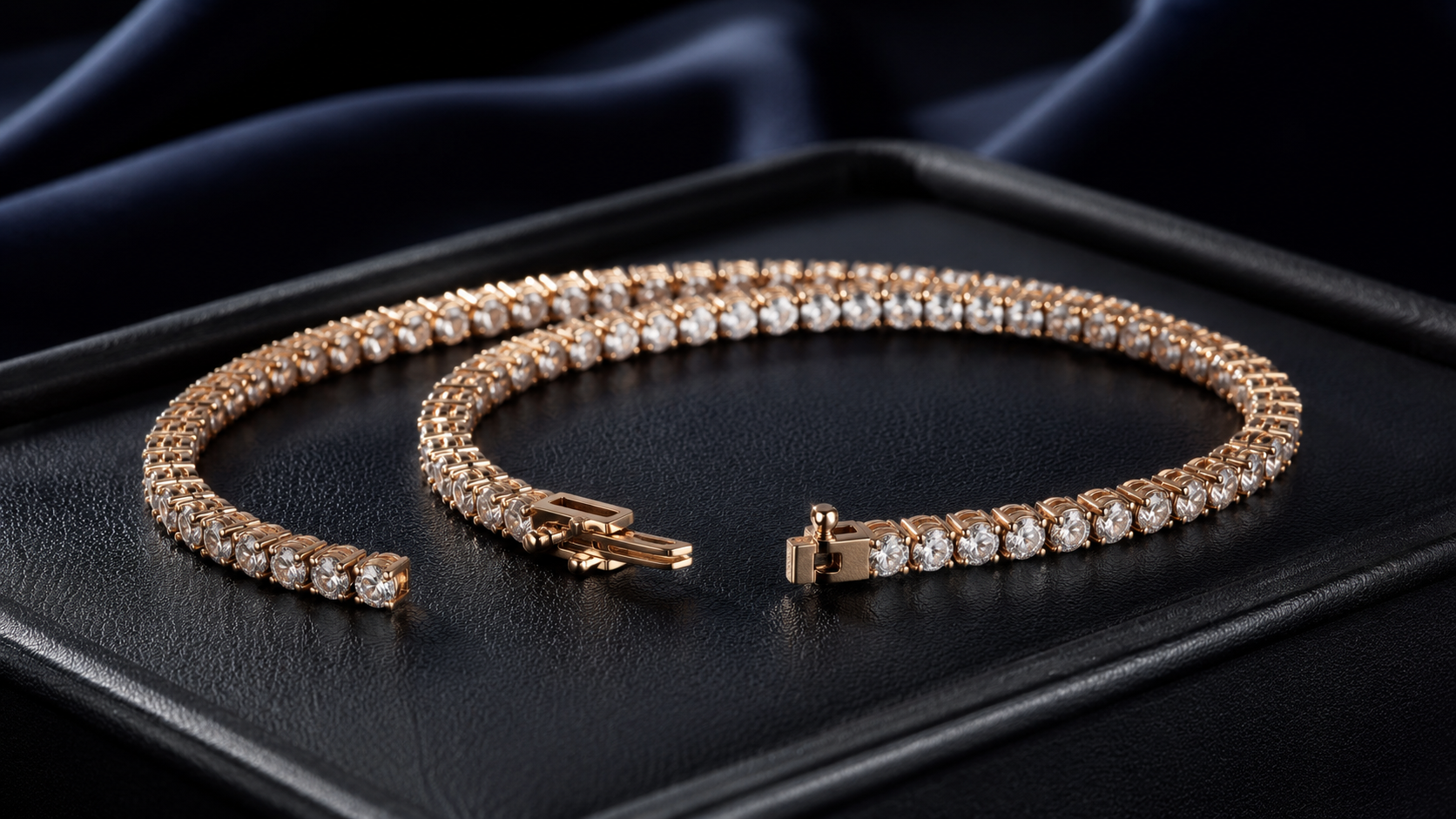
A tennis bracelet is a flexible line of small diamonds, each in its own setting, joined by hinges and closed with a clasp. The name comes from a famous interruption to a professional match in the 1980s, when a player stopped play to find hers. That story tells you the first thing to know about the piece: it is the item of jewellery most likely to fall off, and the details that stop it from doing so are the details to check.
The tennis bracelet clasp first
Everything else can be beautiful and the bracelet is still gone if the clasp lets go. Look for:
A box clasp with a safety. The tongue clicks into a box, and a separate figure-of-eight or hinged safety catch closes over it. Two independent closures. This is the standard for any bracelet of value.
A clasp you can operate. Try it with one hand, as you will every day. A safety that is too small to work becomes a safety that is left open.
Solid construction. Press the closed clasp gently sideways. It should not flex or gape. The clasp is usually the heaviest single component and there is no good reason to save weight there.
The links
A tennis bracelet is a chain of tiny joints, and each one is a place where wear happens.
Movement. Hold the bracelet by one end and let it hang. It should drape smoothly without kinks or stiff spots. Then lay it flat: every link should sit level, with no stone tilted.
Type of setting. Four-prong settings show the most stone and catch the most fabric. Bezel and half-bezel settings are sturdier and lower. Channel-set bracelets hold stones between two rails with no prongs at all, the most secure style and the one that reads as a solid line of light.
Hinge pins. These are the parts that fail. Ask what they are made of and whether they can be replaced individually. A well-made bracelet can have a single link removed and repaired; a poorly made one has to be cut apart.
Weight. Ask the gram weight of the metal. Two bracelets with identical stones can differ by half in the amount of gold holding them, and the lighter one will stretch, kink and lose stones sooner.
Fit
A bracelet worn too loose slides over the hand and catches on things; too tight and the hinges strain. The usual guide is the wrist measurement plus about one and a half to two centimetres, so that a finger slides underneath. Most are made at a standard length and shortened by removing links, which is a simple job if the bracelet is well made.
The stones
Total weight versus stone count. Bracelets are sold by total carat weight, but the look depends on the size of each stone and how many there are. Two bracelets of three carats total can have forty stones or ninety. Ask for both figures.
Consistency. Every stone should match in size, colour and cut. Look along the line in daylight and check for any that read warmer or duller than their neighbours.
Grades. As with earrings, very high colour and clarity are wasted on small stones in constant motion. G to H colour with clean-looking SI clarity is a sensible level; the money is better spent on the setting.
Lab-grown. Because the piece uses many small stones, grown diamonds bring the cost down considerably without any visible difference. For the same budget, a grown-diamond bracelet can afford heavier metal and a better clasp, which is a good trade.
Ownership
Have the prongs and hinges checked every six months to a year. Take it off for sport, sleep and anything involving gloves or long sleeves that catch. Keep it in its own pouch, not tangled with chains. And if a stone ever falls out, stop wearing the bracelet until it is repaired, because the empty setting weakens the links either side.
Book a complimentary design consultation at the C'Garden atelier, The MET Corporate Towers, Kuala Lumpur: 010-766 7448 · hq@cgarden.com.my
C'Garden is an independent bespoke jeweller in Kuala Lumpur. We are not affiliated with, endorsed by, sponsored by or certified by any organisation, laboratory or brand named in this article. Third-party names are used only to refer factually to those organisations and their published standards. All text and imagery in this article is original work created by C'Garden.
Reference
Jewelers of America. (n.d.). Jewelry care. Jewelers of America. https://www.jewelers.org/buying-jewelry/jewelry-repair-and-care/jewelry-care
All journal entries