
Selling Gold Back: What You Will Actually Get
The making charge does not come back, and the reasons are structural rather than sharp practice. How buy-back is calculated and how to get the better end of it.
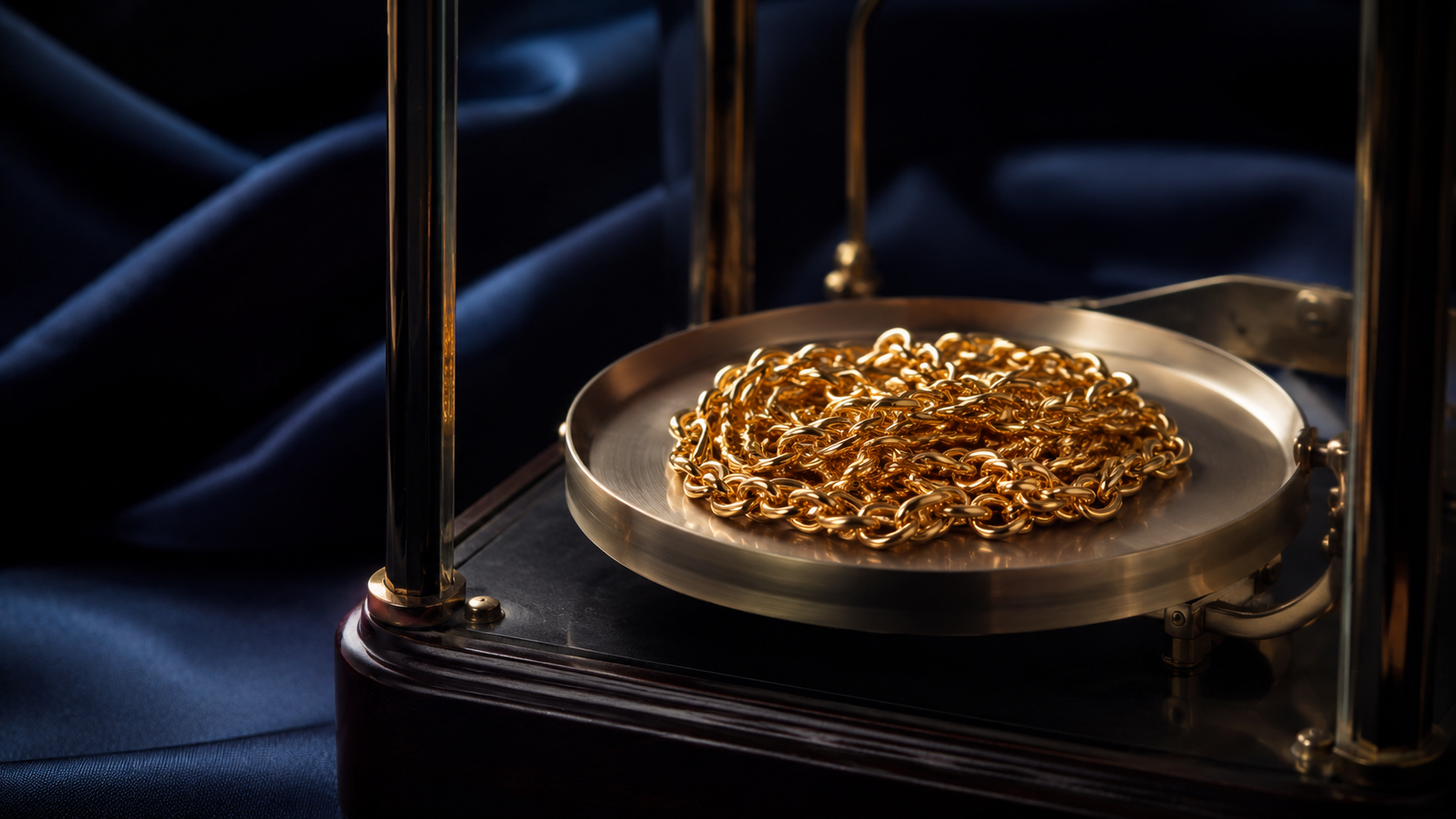
The moment of selling gold back is where a lot of goodwill is lost, almost always because nobody explained the arithmetic at the time of purchase.
What you are paid for
Almost universally, you are paid for the metal only: weight × the day's rate for that fineness, sometimes less a small handling deduction.
You are not paid for the workmanship. On an intricate piece the making charge might have been a substantial share of what you paid, and none of it returns.
Why the labour does not come back
The buyer is not acquiring your design. In most cases the piece will be melted and refined. Whatever skill went into it is gone at that point, so it cannot be part of the price.
It is the same logic as any manufactured object: you are selling the material, not the manufacturing.
What this means at purchase time
Intricate jewellery should be bought to wear. If your reason for buying is to store value, buy plain, or buy bars and coins, where the premium over spot is small and predictable.
A heavy plain chain retains a higher proportion of its purchase price than a finely worked bracelet of the same weight. Neither is better; they are for different purposes.
Where to sell
The shop you bought from. Often the best rate, particularly where a buy-back was agreed at purchase. Some offer better terms for trade-in against a new piece than for cash.
Another jeweller. Will usually buy, typically at a slightly wider margin, and may test the metal.
A pawnbroker. Fast and convenient, generally the lowest price. Reasonable in an emergency, poor as a plan.
Never sell to an unsolicited buyer who approaches you, and never accept a valuation from someone who has taken your piece out of your sight.
How to get a better outcome
Bring documentation. The original receipt and fineness stamp make a transaction quicker and reduce testing deductions.
Know the day's rate before you go. Published rates are easy to check. You will not get spot, a dealer's margin is legitimate, but you will know whether an offer is close or insulting.
Get more than one quote for anything substantial. Rates differ more than people expect.
Weigh it yourself first, roughly, on a kitchen scale. You are checking for honesty, not precision.
Separate the stones question. Small stones in a piece being melted are usually worth little to a gold buyer. If a diamond is significant, sell it separately or reset it, do not let it go with the scrap.
The piece worth not selling
Before selling anything inherited, get an opinion on whether it has period or design value above its metal weight. Genuine antique work is worth considerably more intact than melted, and that is a one-way decision.
Book a complimentary design consultation at the C'Garden atelier, The MET Corporate Towers, Kuala Lumpur: 010-766 7448 · hq@cgarden.com.my
C'Garden is an independent bespoke jeweller in Kuala Lumpur. We are not affiliated with, endorsed by, sponsored by or certified by any organisation, laboratory or brand named in this article. Third-party names are used only to refer factually to those organisations and their published standards. All text and imagery in this article is original work created by C'Garden.
Reference
World Gold Council. (2026). Jewellery: Gold demand trends full year 2025. World Gold Council. https://www.gold.org/goldhub/research/gold-demand-trends/gold-demand-trends-full-year-2025/jewellery
All journal entries