
Scratches on Gold: Normal Wear, Damage, and When to Polish
A scratched gold ring is usually a ring doing its job. How to tell everyday wear from real damage, what polishing removes, and why polishing costs metal.
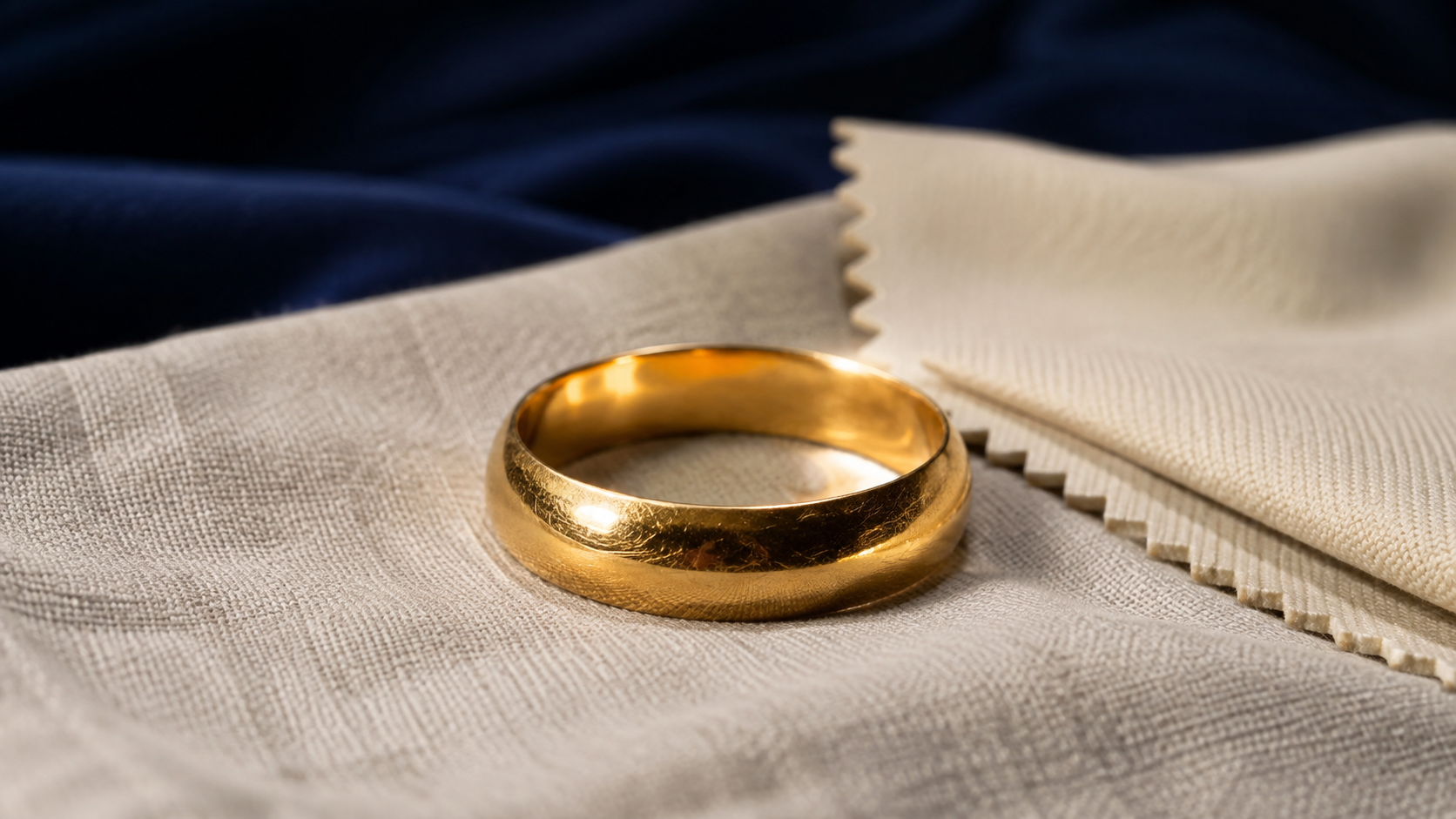
The first scratch on a new ring is always the worst one. After that they arrive steadily, and within a few months a scratched gold ring is simply what a worn gold ring looks like. The question is not whether it will scratch. It is which marks are ordinary, which are a problem, and what to do about each.
Why gold scratches so readily
Gold sits at about 2.5 to 3 on the Mohs hardness scale, depending on alloy. That is softer than a steel key, a granite worktop, most sand and the diamond in the ring next to it. Anything harder than the metal will leave a line when dragged across it.
916 gold is the softest common jewellery alloy and scratches most easily.
18 karat is harder, and white gold alloys harder still.
Platinum scratches as readily but loses less metal doing so, because it displaces rather than sheds.
Hardness is the single reason a ring worn daily cannot stay pristine. No coating changes this for long.
Normal wear
A haze of fine lines across the whole surface, visible in strong light. This is a patina. On a plain band many people prefer it once they stop fighting it.
Slightly softened edges on a band that started crisp.
A duller underside where the ring rubs the palm and the neighbouring finger.
None of this affects the ring structurally. It is cosmetic, and it is reversible.
Damage
A deep single gouge with raised metal along its edges. Usually a hard knock against concrete or a door frame. Cosmetic, but deep enough that polishing it out removes noticeable metal.
A dent or flat spot on a band. The shank has been deformed, most often by gripping something heavy. Needs reshaping, not polishing.
Scratches around a setting accompanied by a stone that moves or clicks. The prongs or bezel have been hit. Have it checked before wearing again.
A thin groove wearing right around the inside, often on rings worn against another ring. Two bands rubbing for years can wear each other down. Worth a jeweller's opinion on thickness.
What polishing actually does
Polishing does not fill scratches. It removes a thin layer of metal from the whole surface until the bottom of the scratches is the new surface. Every polish takes a little gold away. On a heavy band this is trivial for decades. On a delicate ring, a thin-walled bangle or an old piece already worn thin, repeated polishing can measurably reduce weight and strength.
A light professional polish once a year or so is reasonable for most rings.
Polishing every few months to keep a mirror finish is a slow way of wearing the ring out.
Home polishing cloths are gentler and remove very little, but also do very little on anything beyond surface haze.
Alternatives to polishing
A brushed or satin finish hides fine scratches far better than a high polish, because the surface is already textured. Many people who fight scratches on a polished band are happier after a single change of finish.
Leaving it. A ring worn every day for thirty years develops a soft, even glow that no new ring has. It is a record, and it is not a fault.
When to take it in
Bring the ring to a jeweller if a stone feels loose, if the band is no longer round, if the inside has a visible groove, or if you simply want the finish refreshed before an occasion. Ask how much metal the polish will remove and how many times the piece can reasonably take it. A good bench will tell you honestly.
Book a complimentary design consultation at the C'Garden atelier, The MET Corporate Towers, Kuala Lumpur: 010-766 7448 · hq@cgarden.com.my
C'Garden is an independent bespoke jeweller in Kuala Lumpur. We are not affiliated with, endorsed by, sponsored by or certified by any organisation, laboratory or brand named in this article. Third-party names are used only to refer factually to those organisations and their published standards. All text and imagery in this article is original work created by C'Garden.
Reference
Jewelers of America. (n.d.). Jewelry repair and care. Jewelers of America. https://www.jewelers.org/buying-jewelry/jewelry-repair-and-care
All journal entries