
How to Buy a Sapphire: Colour Before Everything
With sapphire, colour drives value more than any other factor. What to look for in tone and saturation, and why sapphire suits daily wear.
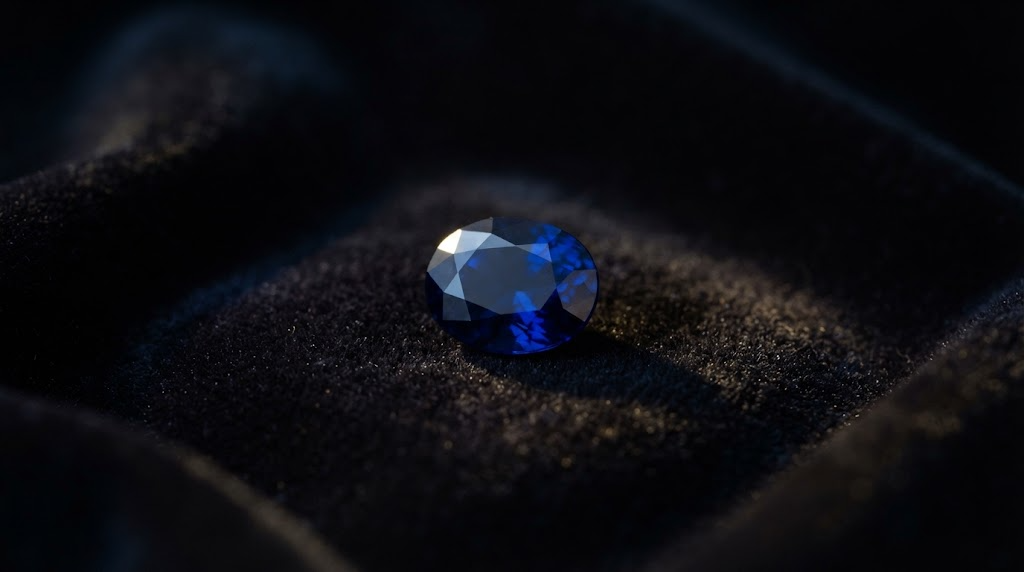
Sapphire is one of the big three coloured gemstones, alongside ruby and emerald, and it is the one we are asked for most often as an alternative to diamond.
The buying logic is completely different from diamond, and the difference catches people out.
Colour is the whole decision
With diamond, cut governs beauty. With sapphire, colour governs value more than any other factor.
The most highly valued blue sapphires are velvety blue to violetish blue, in medium to medium-dark tones, with strong to vivid saturation.
Three words matter:
Hue, the colour itself. Pure blue to slightly violet is most prized. Green or grey undertones reduce value.
Tone, how light or dark. Too light reads washed out. Too dark goes inky and loses life. Medium to medium-dark is the target.
Saturation, the intensity. This is what separates a good sapphire from a spectacular one. Grey or brown modifiers dull the colour and pull value down sharply.
Why sapphire suits daily wear
Sapphire is exceptionally hard, second only to diamond among gems in common use. That makes it genuinely practical for a ring worn every day, which is not true of every coloured stone.
Emerald, by contrast, is typically included and considerably more fragile. It is a beautiful stone and a demanding one.
Clarity, and why the standard differs
Coloured stones are held to a different clarity expectation than diamond. Inclusions are normal in sapphire, and some, fine silk-like needles, can actually improve appearance by scattering light and producing that velvety quality.
Judge a sapphire face-up, by eye, not through a loupe.
Not all sapphires are blue
Sapphire occurs in almost every colour: pink, yellow, green, purple, orange, and the rare pinkish-orange padparadscha. Any non-blue sapphire is described by its colour.
These are worth knowing about. A yellow or teal sapphire can be strikingly individual and often costs considerably less than blue of comparable quality.
Treatment, ask directly
Most sapphire on the market is heat treated to improve colour and clarity. This is long-established, stable and generally accepted, and it should be disclosed.
Ask two questions: has it been treated, and how? Heat is normal. Other treatments, diffusion, fracture filling, affect value considerably more and must be disclosed.
Frequently asked questions
Is sapphire good for an engagement ring?
Yes. Its hardness makes it one of the few coloured stones genuinely suited to daily wear.
What is the best sapphire colour?
Velvety blue to violetish blue, medium to medium-dark, vividly saturated.
Are inclusions acceptable?
Yes, within reason. Judge by eye rather than magnification.
Is heat treatment a problem?
It is standard and accepted, provided it is disclosed.
Book a complimentary design consultation at the C'Garden atelier, The MET Corporate Towers, Kuala Lumpur: 010-766 7448 · hq@cgarden.com.my
C'Garden is an independent bespoke jeweller in Kuala Lumpur. We are not affiliated with, endorsed by, sponsored by or certified by any organisation, laboratory or brand named in this article. Third-party names are used only to refer factually to those organisations and their published standards. All text and imagery in this article is original work created by C'Garden.
Reference
Gemological Institute of America. (n.d.). Sapphire buyer's guide. GIA. https://www.gia.edu/sapphire/buyers-guide
All journal entries