
How to Buy a Ruby: The Most Expensive Colour in the World
Ruby can command the highest per-carat prices of any coloured gemstone. What drives that, what fine ruby colour actually looks like, and how to buy sensibly.
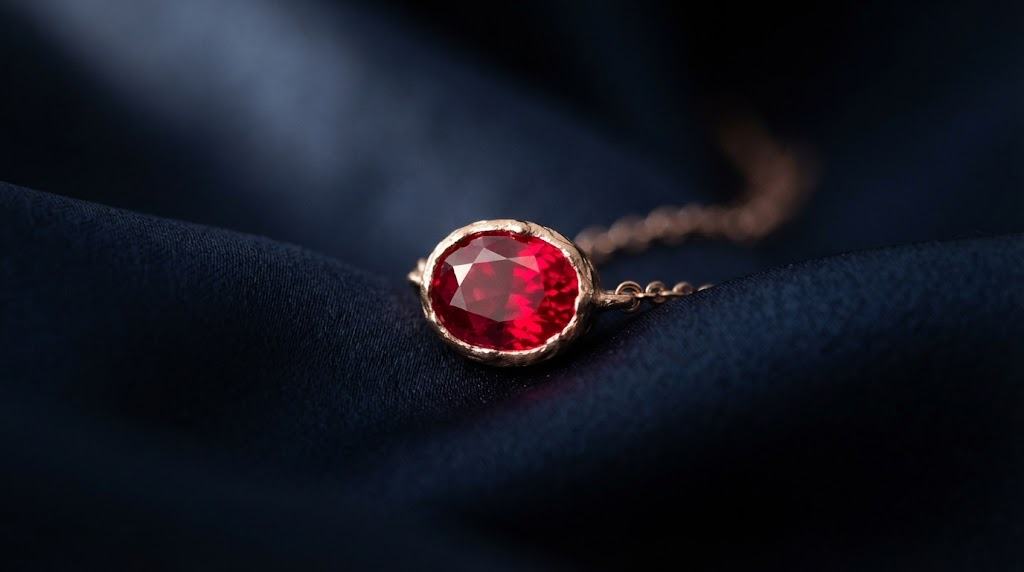
Ruby can command the highest prices of any coloured gemstone, higher, per carat, than diamond at the top of the market. Fine ruby prices have risen consistently, repeatedly breaking auction records.
Understanding why explains how to buy one sensibly.
Colour is nearly everything
The finest ruby has a pure, vibrant red to slightly purplish red colour.
As with sapphire, three factors:
Hue. Pure red is most valued. A slight purplish cast is acceptable and often attractive. Orange or brown modifiers reduce value significantly.
Tone. Medium to medium-dark. Too light and the stone is properly a pink sapphire, the same mineral, a different name and a different price. Too dark and it goes garnet-like.
Saturation. Vivid saturation is what creates the premium. This is the single largest driver of ruby value.
Ruby and sapphire are the same mineral
Both are corundum. Red corundum is ruby; every other colour is sapphire.
The boundary between a light ruby and a pink sapphire is a matter of grading judgement, and it sits on a very significant price difference. This is worth knowing before you are shown two similar stones with very different tickets.
Why fine ruby is so expensive
Rarity of size. Fine ruby above a couple of carats is genuinely scarce. Diamonds of equivalent size are far more available.
Rarity of colour. Most ruby is too dark, too light, or modified toward orange or brown. Vivid medium-red material is a small fraction of what is mined.
Inclusions are the norm. Eye-clean fine ruby of any size is exceptional.
Clarity, different expectations again
Inclusions are expected in ruby, and their absence in a large stone should prompt questions rather than delight. Silk-like inclusions can soften light attractively.
Judge face-up, by eye.
Treatment matters more here
Ruby is commonly treated, and the type matters enormously to value.
Heat treatment, standard and accepted.
Lead-glass filling, fills surface-reaching fractures with glass. It transforms low-grade material into something that looks acceptable, and it is fragile. These stones can be damaged by ordinary jewellery repair, ultrasonic cleaning, even lemon juice.
Ask specifically about glass filling. A reputable seller will answer immediately and in writing. Glass-filled ruby is not a scandal if disclosed and priced accordingly, it is a serious problem when it is not.
Frequently asked questions
Why is ruby more expensive than diamond?
At the fine end, because vivid untreated ruby in larger sizes is rarer.
What is pigeon's blood?
A trade term for the most prized vivid red. It is descriptive, not a standardised grade, treat it with care.
Is ruby hard enough for daily wear?
Yes. As corundum it is second only to diamond in hardness among common gems.
Should I avoid treated ruby?
Heat treatment is fine. Glass filling requires disclosure, careful handling and a much lower price.
Book a complimentary design consultation at the C'Garden atelier, The MET Corporate Towers, Kuala Lumpur: 010-766 7448 · hq@cgarden.com.my
C'Garden is an independent bespoke jeweller in Kuala Lumpur. We are not affiliated with, endorsed by, sponsored by or certified by any organisation, laboratory or brand named in this article. Third-party names are used only to refer factually to those organisations and their published standards. All text and imagery in this article is original work created by C'Garden.
Reference
Gemological Institute of America. (n.d.). Ruby buyer's guide. GIA. https://www.gia.edu/ruby/buyers-guide
All journal entries