
Rings During Pregnancy: Swelling, Sizing and Timing
Ring too tight? Pregnancy swelling is common and usually temporary. When to take a ring off, how to free a stuck one safely, and why not to resize yet.
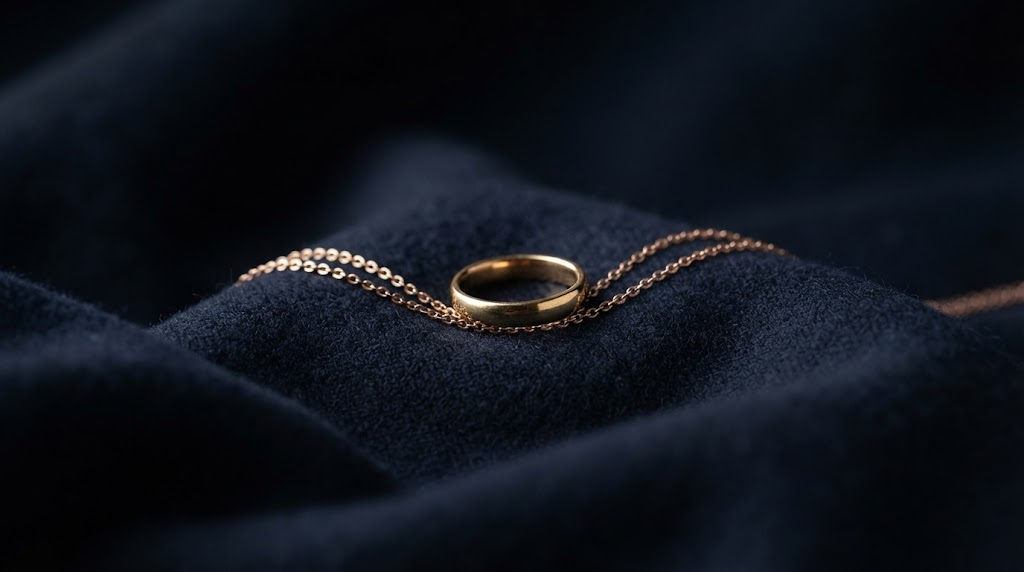
Ring too tight? Pregnancy is one of the most common reasons a wedding band comes into a workshop, and one of the few where the right answer is usually to do nothing to the ring. Fingers change through pregnancy and change back afterwards, on a timetable that varies from person to person. Resizing to fit a temporary finger creates a permanent problem.
Why fingers swell
Blood volume rises substantially during pregnancy and the body retains more fluid, especially in the third trimester. Hands and feet are the first to show it. Malaysian heat adds to the effect, because warm weather already causes fingers to expand. A ring that was comfortable in the first trimester may be difficult by the seventh month and impossible by the ninth.
Swelling is normally gradual. Sudden, marked swelling of the hands and face, particularly with headache or visual disturbance, is a reason to contact your doctor the same day, not a jewellery matter.
Ring too tight: pregnancy timing for taking it off
Before it becomes hard to remove, not after. The practical test is whether the ring turns freely and passes the knuckle with light pressure. Once it needs soap to come off, it is time.
Before any hospital admission. Most labour wards ask for rings to be removed, and a ring that will not come off may have to be cut.
If the skin under it changes. Redness, indentation that does not fade or numbness in the fingertip means the ring is restricting circulation.
Getting a stuck ring off
Cold water for a few minutes, hand raised above the heart, then soap or a little oil, and a slow twisting motion rather than a pull. Wrapping the finger with thread from tip to ring and unwinding from the ring side works on a moderately stuck ring. If the finger is discoloured or the ring will not move after gentle attempts, go to a clinic or emergency department. Cutting a ring is quick, and a workshop can rejoin and resize it afterwards; a finger is harder to repair.
What to do with the ring meanwhile
Wear it on a chain. The most common solution, and the one that keeps the ring close.
A temporary band. A plain silicone or inexpensive band in a larger size, which can be replaced as the finger changes.
Move it to a smaller finger, if the design allows and the fit is secure.
Why not to resize
Post-partum, fluid retention resolves over weeks, though hand size may take several months to settle and some people find their ring size permanently changed by a fraction. Resizing during pregnancy means resizing again afterwards, and each resize removes or adds metal, weakens the join slightly and can disturb stones set near the base.
The sensible sequence is: wait until at least three months after the birth, wear the ring for a few days across a range of temperatures, then decide. If it still does not fit, resize once.
If the ring genuinely cannot be resized
Eternity bands, tension settings and some heavily set shanks cannot be enlarged. For those, a chain now and, if needed, a new band later is the only clean route. A workshop can often remake the original design in a new size and reuse the stones.
A note for those commissioning during pregnancy
If a ring is being made now for wear later, size it to the pre-pregnancy finger, not the current one, and expect to check the fit after the birth before final adjustment.
Book a complimentary design consultation at the C'Garden atelier, The MET Corporate Towers, Kuala Lumpur: 010-766 7448 · hq@cgarden.com.my
C'Garden is an independent bespoke jeweller in Kuala Lumpur. We are not affiliated with, endorsed by, sponsored by or certified by any organisation, laboratory or brand named in this article. Third-party names are used only to refer factually to those organisations and their published standards. All text and imagery in this article is original work created by C'Garden.
Reference
NHS. (n.d.). Swollen ankles, feet and fingers in pregnancy. National Health Service. https://www.nhs.uk/pregnancy/related-conditions/common-symptoms/swollen-ankles-feet-and-fingers/
All journal entries