
Restringing Pearls: When, Why and How Often
Pearl restringing is routine maintenance, not a repair. How silk thread wears, the signs a strand is due, why every pearl is knotted and what to expect.
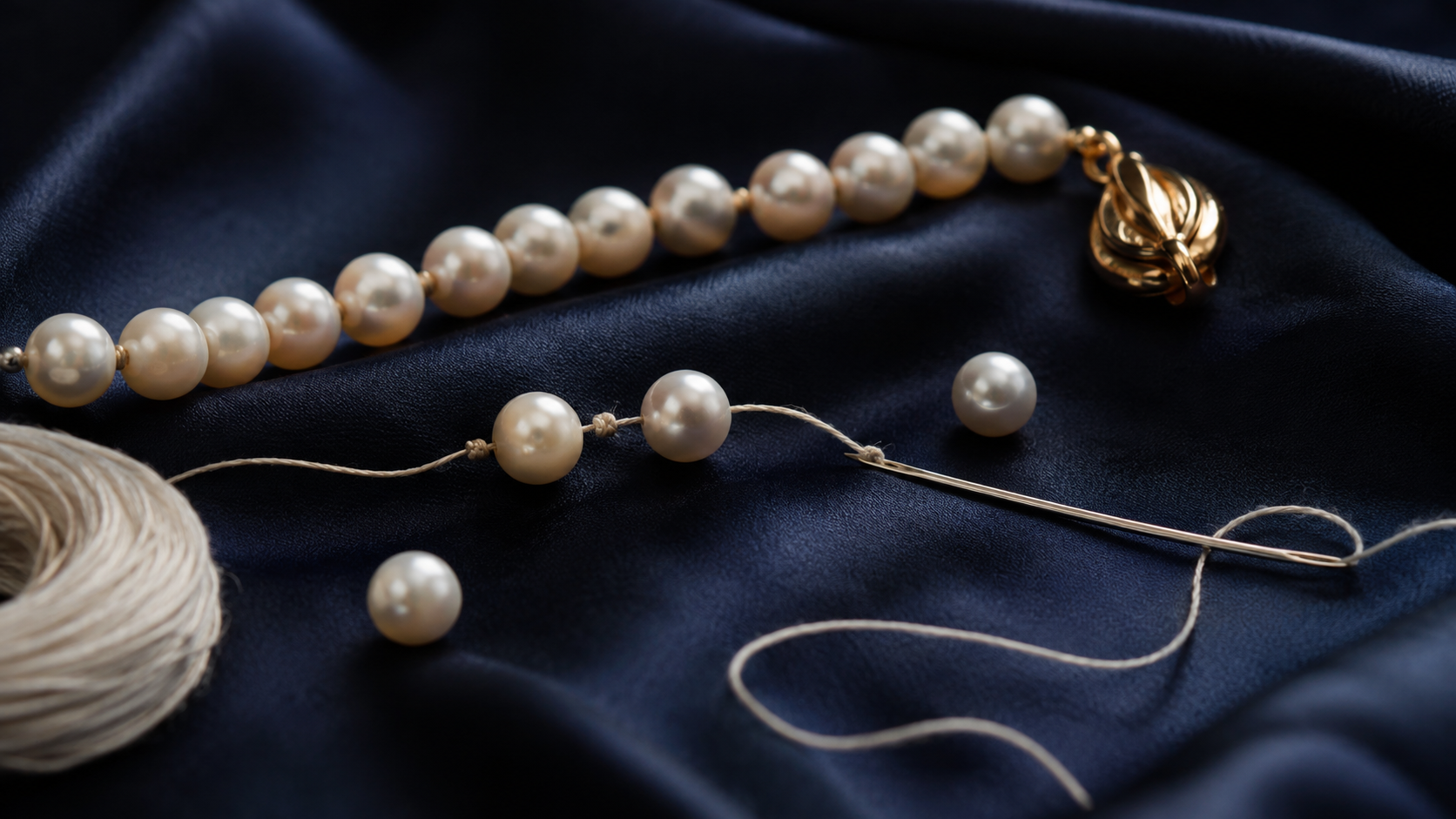
A pearl necklace is the only piece of fine jewellery that is held together by thread. Everything else is metal. That single fact explains why pearl restringing is part of owning a strand rather than an occasional emergency, and why a strand that has never been restrung is a strand waiting to spill across a floor.
What holds the strand together
Most good strands are strung on silk. Silk is chosen because it is strong for its thickness, drapes softly and takes a tight, small knot. Nylon and synthetic cords are used too, and are more resistant to moisture, but silk remains the standard for a strand that should hang well.
Each pearl is separated from the next by a knot. The knots do three jobs. They stop pearls rubbing against one another, which would wear the nacre at the drill holes. They keep the strand flexible. And if the thread breaks, only one pearl can fall.
A strand without knots between pearls is cheaper to string and worse in every way that matters.
Why thread wears out
Stretch. Silk lengthens under the weight of the pearls. Over time the knots loosen and small gaps open beside them.
Abrasion. The drill holes in each pearl are hard-edged. Every movement saws the thread very slightly.
Moisture and skin. Sweat, perfume, cosmetics and humid air all soak into silk. It discolours, then weakens. Kuala Lumpur's climate accelerates this compared with a dry country.
The clasp end. The thread takes the most strain where it meets the clasp, and that is where most breaks happen.
The signs a strand is due
Gaps. Look at the strand hanging. If you can see thread between pearl and knot, it has stretched.
Discoloured thread. White silk turning yellow or grey at the knots.
Stiffness or kinks. A strand that does not drape smoothly or holds a bend.
Fraying at the clasp. Fine fibres visible where the thread enters the clasp fitting.
Pearls that rotate loosely. A sign the knots have slackened enough that the pearls no longer sit snugly.
Any one of these is a reason to restring soon. Two or more means stop wearing it until it is done.
How often
Worn regularly. Roughly once a year is the usual guidance. Some strands worn daily in humid conditions want it sooner.
Worn occasionally. Every two to three years, or when any of the signs above appear.
Kept in a drawer. Thread still deteriorates slowly, so a strand inherited after years in storage should be restrung before it is worn, regardless of how it looks.
What restringing involves
The strand is cut apart, each pearl is cleaned around the drill hole, and the pearls are restrung in their original order on fresh thread with a new knot between each. The clasp is reattached, often with a French wire or gimp to protect the thread where it meets the metal.
It is a good moment to check the clasp itself. Spring rings and small lobster clasps wear out; a worn clasp is a common cause of a lost necklace.
It is also the moment to ask for changes: a slightly longer strand by adding a few pearls at the back, a different clasp, or removing a damaged pearl and rebalancing the graduation.
What restringing will not fix
Worn nacre, chips, or pearls that have dulled from cosmetics are permanent. Restringing protects the pearls from further damage between them; it does not restore surface that has already gone.
Caring for the strand between restringings
Put pearls on last, after perfume and hairspray, and take them off first. Wipe them with a soft damp cloth after wearing. Store them flat rather than hung, so the thread is not under constant load. Keep them away from harder jewellery in the box.
Do that, restring on schedule, and a strand of good pearls will outlast the person who bought it.
Book a complimentary design consultation at the C'Garden atelier, The MET Corporate Towers, Kuala Lumpur: 010-766 7448 · hq@cgarden.com.my
C'Garden is an independent bespoke jeweller in Kuala Lumpur. We are not affiliated with, endorsed by, sponsored by or certified by any organisation, laboratory or brand named in this article. Third-party names are used only to refer factually to those organisations and their published standards. All text and imagery in this article is original work created by C'Garden.
Reference
Gemological Institute of America. (n.d.). Pearl. GIA. https://www.gia.edu/pearl
Jewelers of America. (n.d.). Jewelry care. Jewelers of America. https://www.jewelers.org/buying-jewelry/jewelry-repair-and-care/jewelry-care
All journal entries