
Natural, Synthetic and Imitation: Three Words That Are Not the Same
Synthetic vs imitation gemstone: one is the real mineral grown by people, the other only looks the part. How to tell which you are offered.
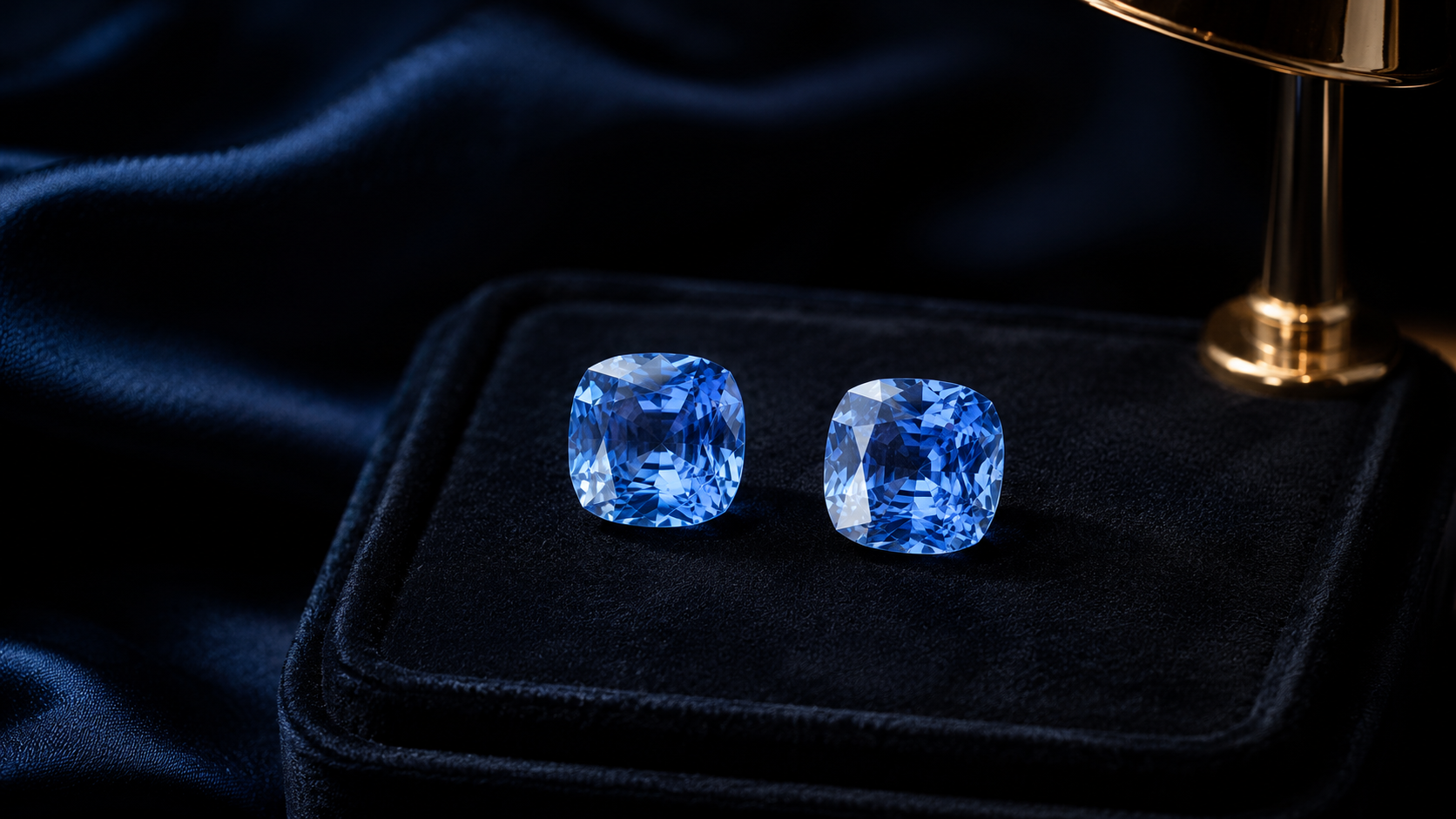
Ask ten people whether a synthetic sapphire is a real sapphire and you will get a split room. The synthetic vs imitation gemstone question is confusing because everyday language uses "synthetic" and "fake" interchangeably. The gem trade does not, and the difference matters to what you pay and what you own.
Natural
A natural gemstone formed in the earth without human help. It may have been cut, polished and treated afterwards, and still be natural. Treatment is a separate question from origin.
Synthetic
A synthetic gemstone has essentially the same chemical composition, crystal structure and physical properties as its natural counterpart, but was grown by people. A synthetic sapphire is corundum. It is as hard as natural corundum, refracts light the same way and will test as sapphire on a refractometer.
The trade also accepts the terms "laboratory-grown", "laboratory-created" and "created" for the same thing. What is not acceptable is calling it simply "sapphire" with no qualifier.
Synthetics have been made commercially since the early twentieth century. The Verneuil flame fusion process produced synthetic ruby from 1902. Flux growth, hydrothermal growth and, for diamond, high pressure high temperature and chemical vapour deposition followed. Some methods produce material that requires a well-equipped laboratory to separate from natural.
The value difference is large. Because supply is unlimited and growing costs are known, a synthetic stone is worth a small fraction of a natural one of the same appearance. That is not a flaw if you know what you are buying. It is a problem only when a synthetic is sold at a natural price.
Imitation
An imitation, also called a simulant, only resembles the stone it stands in for. It can be anything: glass, plastic, a different natural mineral, or a synthetic of some other material.
Cubic zirconia is a synthetic material in its own right, but when sold as a diamond look-alike it is an imitation of diamond. Synthetic spinel was for decades cut to imitate aquamarine, blue zircon and even sapphire. Green glass has been sold as emerald for as long as there has been emerald.
An imitation shares none of the properties of what it copies except the look. It is usually softer, has different optical behaviour and is identified quickly by anyone with basic instruments.
Why the words matter at the counter
"Created sapphire" is honest. It tells you the material and that it was grown.
"Sapphire" on a synthetic is a misdescription. Regulators in most markets treat it as such.
"Sapphire-coloured" or "sapphire-style" means imitation. If the word for the stone is used as an adjective, ask what the material actually is.
A price that seems impossible usually is. A clean three carat natural blue sapphire cannot be sold for the cost of a dinner. If it is, it is synthetic or imitation, whatever the label says.
How to protect yourself
Ask three questions in order. Is it natural, synthetic or imitation? Has it been treated? Is there a laboratory report? The answers should be plain and the report should match the stone.
For any significant purchase, insist on a report from an independent laboratory that identifies the material and states whether it is natural or synthetic. This is a routine test and not expensive.
Understand what you want. Some clients choose a synthetic deliberately because they want a large, clean stone in a specific colour and do not mind that it was grown. That is a reasonable decision. What we will not do is let a client believe they own something they do not.
One more distinction
"Genuine" is not a technical term and means very little. A glass bead is genuinely glass. Look for the words natural, synthetic, laboratory-grown or imitation. Those have definitions, and a seller who avoids them is telling you something.
Book a complimentary design consultation at the C'Garden atelier, The MET Corporate Towers, Kuala Lumpur: 010-766 7448 · hq@cgarden.com.my
C'Garden is an independent bespoke jeweller in Kuala Lumpur. We are not affiliated with, endorsed by, sponsored by or certified by any organisation, laboratory or brand named in this article. Third-party names are used only to refer factually to those organisations and their published standards. All text and imagery in this article is original work created by C'Garden.
Reference
Gemological Institute of America. (n.d.). Gem encyclopedia. GIA. https://www.gia.edu/gem-encyclopedia
CIBJO, The World Jewellery Confederation. (n.d.). CIBJO standards. https://www.cibjo.org
All journal entries