
Moissanite vs Lab-Grown Diamond: The Honest Difference
Moissanite vs lab grown diamond is now the most common question at the bench. One is diamond and one is not. What that means for look, wear and value.
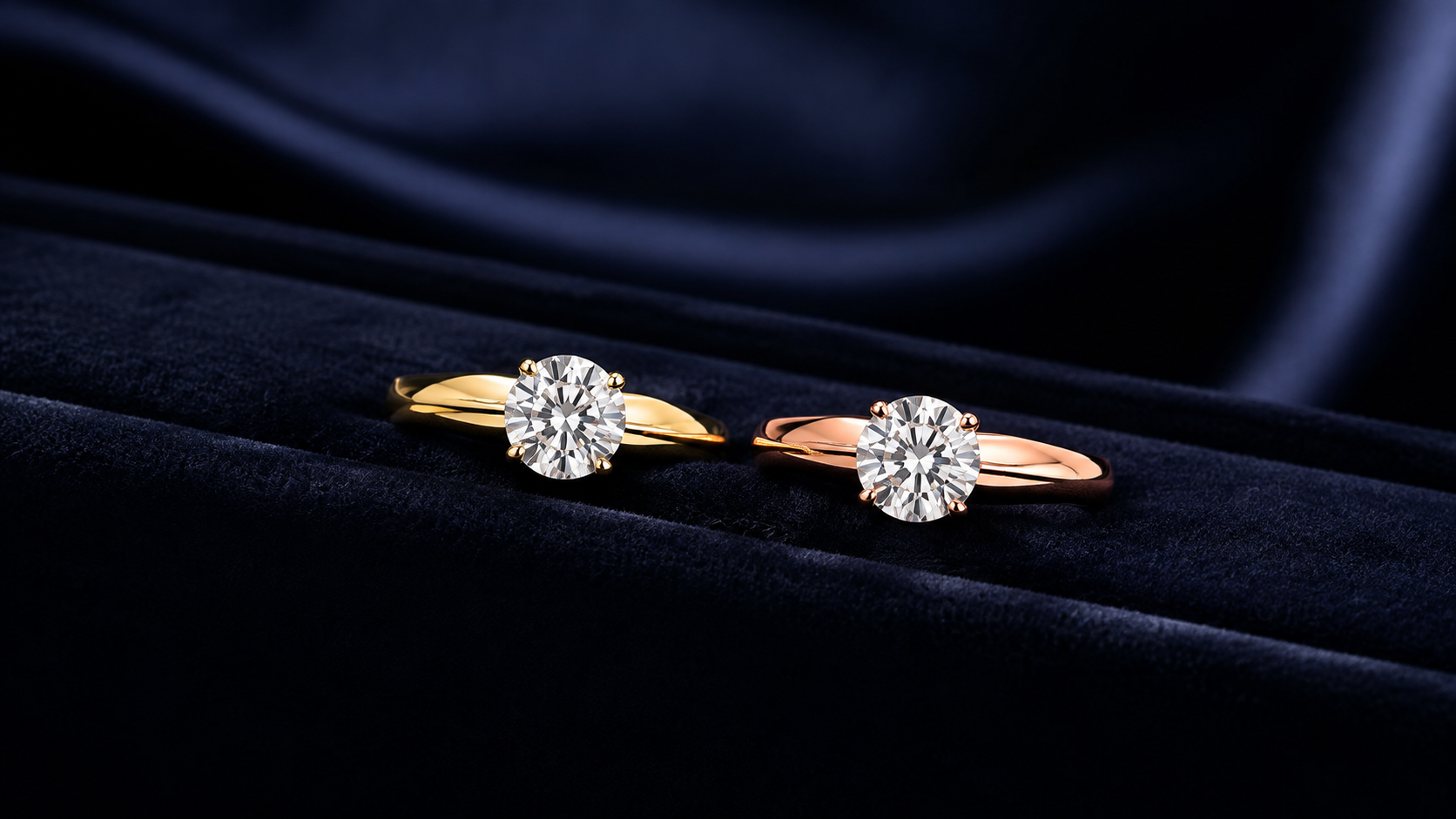
Moissanite vs lab grown diamond has replaced natural vs lab grown as the question we hear most often from buyers under thirty-five. Both stones are made in a factory. Both cost a fraction of a natural diamond. Both are hard enough to wear daily. From there, the two part company, and the difference is not subtle once you know what to look for.
One is diamond, one is not
A lab-grown diamond is diamond. It is carbon in the same crystal structure as a mined stone, with the same hardness, the same refractive index and the same way of handling light. A laboratory can tell the two apart with instruments, but no jeweller can do it with a loupe.
Moissanite is silicon carbide. It is a different compound with a different crystal structure. It resembles diamond well enough that early thermal testers were fooled by it, but it is a distinct material with its own optical fingerprint.
That is the whole comparison in one sentence. Everything else follows from it.
How they look
Fire. Moissanite disperses white light into colour far more strongly than diamond. In sunlight a moissanite of a carat throws visible rainbow flashes; a diamond of the same size gives mostly white sparkle with occasional colour. Some people prefer the moissanite effect. Most people who have seen both side by side describe the diamond as calmer and the moissanite as busier.
Doubling. Moissanite is doubly refractive. Look through the table with a loupe and the back facet edges appear doubled, like slightly misaligned lines. Diamond is singly refractive and shows single, crisp lines. This is the simplest bench test and it is conclusive.
Colour. Lab-grown diamonds are graded on the same D to Z scale as natural stones. Moissanite is sold in broad ranges such as colourless or near colourless, without independent grading. Current moissanite is very white, but the tint can shift towards green or grey in certain lights.
How they wear
Diamond is 10 on the Mohs scale; moissanite is about 9.25. Both shrug off everyday scratching. Both keep their polish. Both are stable to heat and chemicals in normal use. For durability there is no practical difference, and either will outlast the ring it is set in.
How they are graded and valued
A lab-grown diamond of any size worth buying comes with a report from a recognised laboratory, stating the 4Cs, the growth method and any treatment, with a matching inscription on the girdle. It can be insured, valued and identified like any other diamond.
Moissanite is generally sold on the maker's own description. There is no standard report, and a valuer will record it as moissanite by weight and size.
Neither holds resale value in any meaningful way. Lab-grown diamond prices have fallen for years and moissanite was never expensive. Buy either for the object, not as an asset.
Cost
Lab-grown diamond costs more than moissanite of the same size, though the gap has narrowed sharply as diamond growing has scaled. For a given budget, moissanite buys the larger stone; lab-grown diamond buys the stone that is actually diamond.
Moissanite vs lab grown diamond: which to choose
Choose lab-grown diamond if the word matters to you, if you want an independent report, or if you have seen moissanite's fire and found it too much. Choose moissanite if you want maximum size for the money, if the rainbow flash appeals, or if you would rather put the saving into the setting or the wedding.
Both are honest choices. The only dishonest one is a seller who blurs the line between them, and that happens more than it should. Ask which material it is, ask for it in writing, and expect an answer without hesitation.
Book a complimentary design consultation at the C'Garden atelier, The MET Corporate Towers, Kuala Lumpur: 010-766 7448 · hq@cgarden.com.my
C'Garden is an independent bespoke jeweller in Kuala Lumpur. We are not affiliated with, endorsed by, sponsored by or certified by any organisation, laboratory or brand named in this article. Third-party names are used only to refer factually to those organisations and their published standards. All text and imagery in this article is original work created by C'Garden.
Reference
Gemological Institute of America. (n.d.). Laboratory-grown diamonds. GIA. https://www.gia.edu/laboratory-grown-diamond
All journal entries