
Mixing Metals: Does Two-Tone Jewellery Work?
Two tone gold jewellery works when the mix is deliberate. How yellow, white and rose gold behave together, how it is made, and where the snags sit.
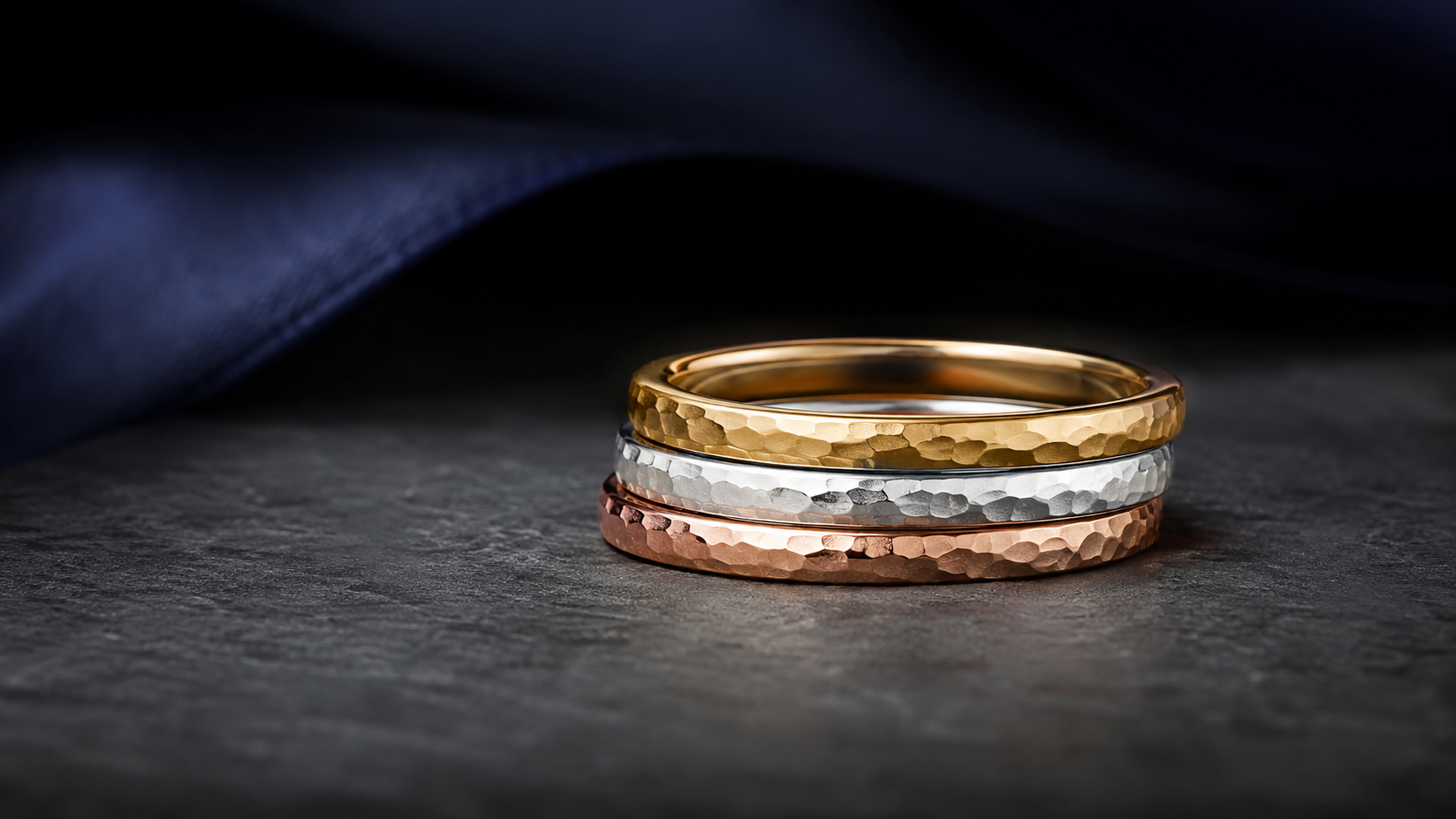
For a long time the rule was simple: yellow with yellow, white with white. The rule was never a good one. Two tone gold jewellery has been made for centuries, and mixed stacks on a single hand are now ordinary. What separates a considered mix from a muddle is intention, and a little knowledge of how the metals behave.
Why the colours exist
All three colours are gold. The difference is the alloy.
Yellow gold is alloyed with copper and silver in balance.
White gold adds palladium or nickel to bleach the colour, and is usually rhodium plated to make it whiter.
Rose gold leans heavily on copper for its pink.
Because the base metal is the same, the three can be soldered to one another, cast together, and worn together without any chemical trouble. Mixing gold with silver or steel raises other issues, covered below.
How two-tone pieces are made
Two-part construction. The most common. A white gold head holding the diamond is soldered onto a yellow gold shank, or a rose gold inlay is set into a white gold band. Each part is made in its own alloy and joined.
Cast in one colour, plated in another. Cheaper, and the plating wears off the highlights within a year or two. Ask which method was used; the answer changes how the piece ages.
Mokume-gane and laminated metals. Layers of different golds forged together and worked to reveal a wood-grain pattern. Labour intensive, distinctive, and durable because the pattern goes right through.
Where two-tone genuinely helps
Diamonds in white, band in yellow. A white gold or platinum setting keeps a colourless diamond looking colourless, while a yellow band flatters warmer skin tones. This is the classic reason for two-tone engagement rings and it remains sound.
Matching an existing set. A rose gold band beside a yellow gold engagement ring worn for years is easier to accept than a mismatched yellow that is nearly, but not quite, the same shade.
Bridging a collection. One two-tone piece lets a wearer move between yellow and white pieces without the hand looking divided.
Where the problems sit
Wear rates differ. 916 yellow gold is softer than 750 white gold. On a piece where the two meet, the softer metal wears faster and the join can become visible. Keep the two at similar karat, ideally both 750.
Rhodium wears unevenly. The white parts of a two-tone piece will need re-plating on the same schedule as any white gold ring. The yellow parts will not. Over time the white parts can yellow slightly at the wear points while the yellow parts stay consistent.
Repair is fussier. Sizing a two-tone shank means cutting through a join, or avoiding it. A competent bench manages, but it takes longer.
Silver and gold together. Sterling silver tarnishes and is much softer. Worn against gold it will scratch and dull first. Stacking is fine; soldering silver to gold in one piece is unusual and rarely advisable.
Making a mix look intentional
Repeat each colour at least twice. One rose gold ring in a hand of yellow looks like an accident. Two, or a rose gold ring and rose gold earrings, looks like a choice.
Let one colour lead. Two tones in roughly equal measure fight. Seventy to thirty settles.
Match finishes. A high-polish white ring next to a brushed yellow one reads as two different pieces; the same finish across both reads as a set.
Two-tone is not a trend to be nervous of. It is a design tool, and like any tool it rewards being used on purpose.
Book a complimentary design consultation at the C'Garden atelier, The MET Corporate Towers, Kuala Lumpur: 010-766 7448 · hq@cgarden.com.my
C'Garden is an independent bespoke jeweller in Kuala Lumpur. We are not affiliated with, endorsed by, sponsored by or certified by any organisation, laboratory or brand named in this article. Third-party names are used only to refer factually to those organisations and their published standards. All text and imagery in this article is original work created by C'Garden.
Reference
World Gold Council. (n.d.). About gold. World Gold Council. https://www.gold.org/about-gold
All journal entries