
Melee, Pavé and Micro-Pavé: The Small Stones Explained
The little diamonds have their own vocabulary, their own price logic and their own failure modes. What to ask before choosing a design covered in them.
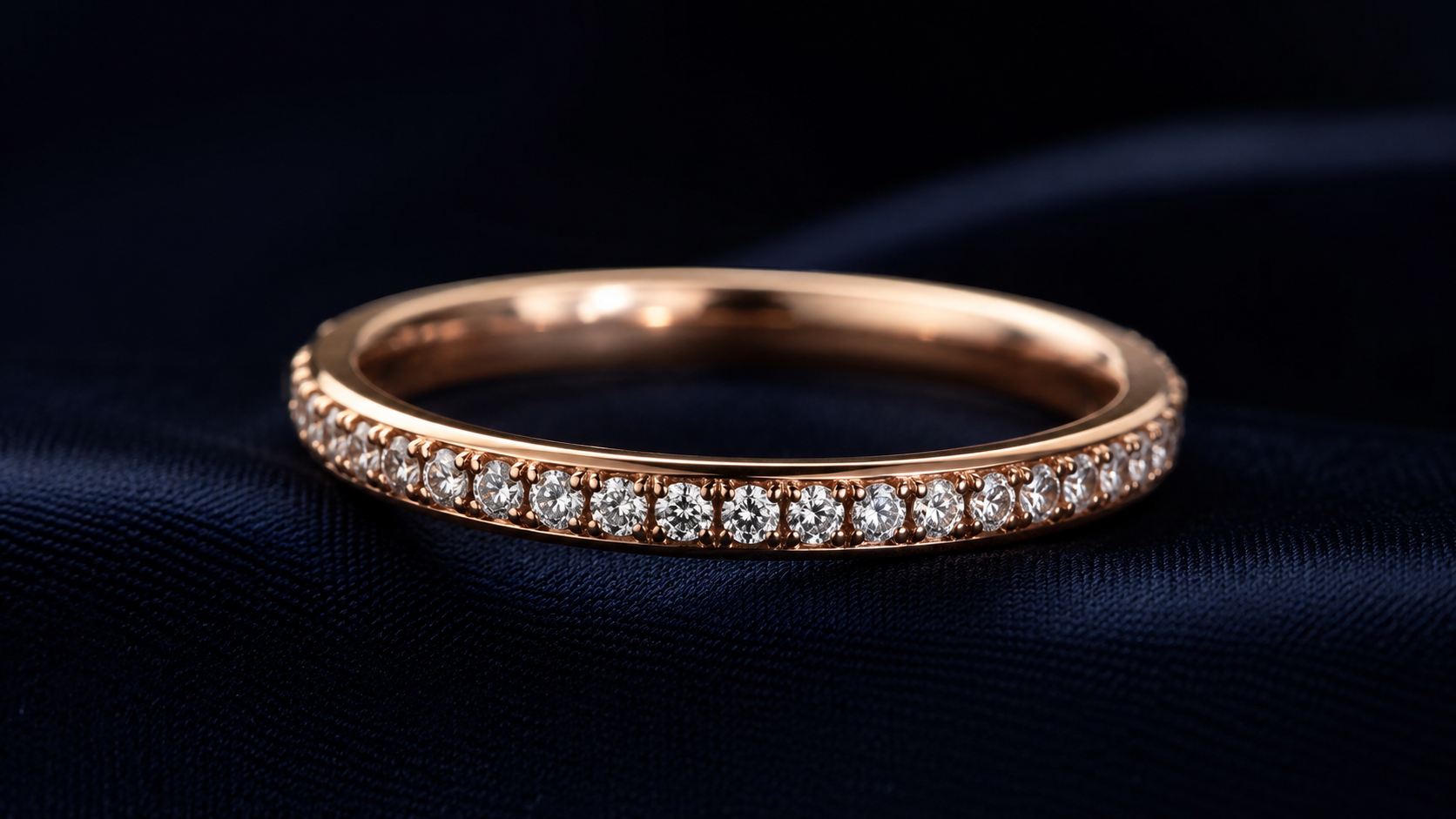
Small stones do a lot of work in jewellery design, and they are where a great deal of the labour cost hides. They are also the most common source of "something fell out" phone calls.
The vocabulary
Melee is the trade term for small diamonds, roughly under 0.2 carats. It describes size, not setting.
Pavé ("paved") is a setting style: stones set close together in the metal surface, held by tiny beads of metal raised from the surrounding surface, so the piece looks paved with diamonds.
Micro-pavé is the same idea with much smaller stones, set more densely, usually under magnification.
Channel setting holds stones between two continuous walls of metal, with no beads between them.
Bezel surrounds each stone with a rim of metal.
Why pavé costs what it does
The stones themselves are not the expense. The setting is.
Each stone is individually seated and secured by hand, under magnification. A band with sixty micro-pavé stones represents hours of skilled bench work. That is why two rings with identical centre stones can differ substantially in price.
This is worth knowing when comparing quotes. A cheaper pavé ring is often more coarsely set, not better value.
The failure modes
Small stones do come loose, and it is worth knowing why.
Bead wear. The tiny metal beads holding each stone abrade over years, especially on the sides of a ring where it contacts the neighbouring finger. Eventually a bead no longer holds.
Impact. A knock on a hard surface can dislodge a stone directly.
Resizing. Sizing a pavé band disturbs the setting. This is the single most common cause of stones dropping shortly after a visit to a jeweller, which is why full pavé eternity bands often cannot be resized at all.
How to reduce the risk
Avoid pavé all the way round if the ring is for daily wear. Stones across the top only, with a plain underside, wear far better and are resizable.
Prefer slightly larger stones set less densely over the very finest micro-pavé, if the ring will be worn hard.
Consider channel or bezel for an active life. Both protect the stone edges better than beads.
Get the settings checked every six months. A jeweller under magnification will see a worn bead long before a stone is lost. This check is usually free.
The questions to ask before ordering
- Is the underside of the band plain, or set all the way round?
- Can this ring be resized later, and if not, is the size final?
- What is covered if a small stone is lost in the first year?
That last one varies enormously between jewellers. Get the answer in writing.
Book a complimentary design consultation at the C'Garden atelier, The MET Corporate Towers, Kuala Lumpur: 010-766 7448 · hq@cgarden.com.my
C'Garden is an independent bespoke jeweller in Kuala Lumpur. We are not affiliated with, endorsed by, sponsored by or certified by any organisation, laboratory or brand named in this article. Third-party names are used only to refer factually to those organisations and their published standards. All text and imagery in this article is original work created by C'Garden.
Reference
Jewelers of America. (n.d.). Rings. Jewelers of America. https://www.jewelers.org/buying-jewelry/jewelry-styles/rings
All journal entries