
Jewellery for Sensitive Skin: Metals That Behave
Hypoallergenic jewellery explained without the marketing: which metals cause reactions, why nickel is the usual culprit, and what alloys to specify.
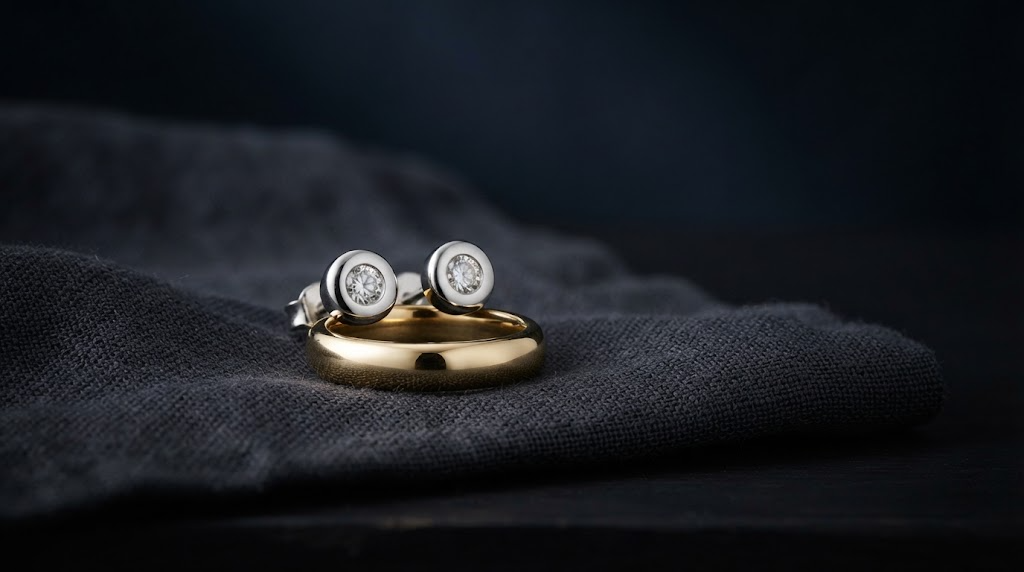
Hypoallergenic jewellery is a label, not a standard. No regulator in Malaysia defines it, and a piece can carry the word while containing exactly the metal that causes the problem. The useful approach is to know which elements cause reactions and to specify the alloy, not the adjective.
What actually causes the reaction
Nickel is responsible for the great majority of jewellery-related contact dermatitis. It is cheap, hard and white, which is why it turns up in costume jewellery, in some earring posts and in older or cheaper white gold alloys. Sensitised skin reacts to nickel ions released by sweat, and Malaysian humidity makes that release faster.
Cobalt and, rarely, palladium can also sensitise, though far less often.
Copper does not usually cause allergy. It does oxidise against the skin and can leave a green mark, which is a chemical stain, not a reaction, and washes off. Low-purity gold and some silver alloys contain enough copper to do this.
Pure gold, pure silver and platinum are essentially inert on skin.
Hypoallergenic jewellery metals that behave
Platinum. Jewellery platinum is typically 950 parts per thousand, alloyed with small amounts of ruthenium, iridium or cobalt. Ruthenium and iridium alloys are the safest choice for very reactive skin. Ask which alloy the workshop uses.
High-carat yellow gold. 22k (916) and 18k (750) yellow gold contain gold, silver and copper, and no nickel. Reactions are rare. 916 is the local standard for that reason among others.
Nickel-free white gold. White gold is yellow gold whitened with other metals. Palladium-white alloys contain no nickel and suit most sensitive wearers. Nickel-white alloys are harder, cheaper and brighter, and are the ones to avoid. Rhodium plating over either hides the alloy for a while, but plating wears, and once it thins the base alloy touches skin again.
Titanium and niobium are inert and light, and are common for medical-grade piercing. They cannot be cast or soldered in the usual way, so they are rare in fine jewellery, but excellent for posts.
Sterling silver is 925 silver with copper. It does not usually cause allergy, though it tarnishes quickly in humid air and can leave marks.
Where the metal touches you
Reactions happen where metal sits against damp skin for hours. Earring posts and ring shanks are the two sites that matter most; a pendant on a chain rarely causes trouble.
Posts. Specify platinum, 18k gold or titanium posts even on earrings whose fronts are another metal. Posts are the single most effective change.
Butterflies and backs. Often the cheapest component on an earring and a frequent source of nickel. Ask.
Shanks. A solid, unplated 18k or platinum shank removes the plating-wear problem entirely.
Habits that help
Dry under rings after washing hands. Take earrings out at night. Clean pieces regularly, because trapped soap and sweat under a setting aggravate skin whatever the alloy. If a piece has been plated as a stop-gap, expect to re-plate it.
If you are unsure what you react to
A dermatologist can patch test for nickel, cobalt and other common sensitisers. Knowing the specific trigger lets you choose an alloy rather than avoid whole categories of jewellery. Many people who believe they cannot wear gold turn out to react only to the nickel in a white gold they once owned.
Specify the alloy in writing. That is the whole method.
Book a complimentary design consultation at the C'Garden atelier, The MET Corporate Towers, Kuala Lumpur: 010-766 7448 · hq@cgarden.com.my
C'Garden is an independent bespoke jeweller in Kuala Lumpur. We are not affiliated with, endorsed by, sponsored by or certified by any organisation, laboratory or brand named in this article. Third-party names are used only to refer factually to those organisations and their published standards. All text and imagery in this article is original work created by C'Garden.
Reference
World Gold Council. (n.d.). About gold: Gold alloys and colours. World Gold Council. https://www.gold.org/about-gold/gold-supply/gold-alloys
All journal entries