
Jade: What Malaysian Buyers Should Know
Jade is two different minerals, three treatment grades and an enormous price range. The distinctions that decide value, and the one question to ask every seller.
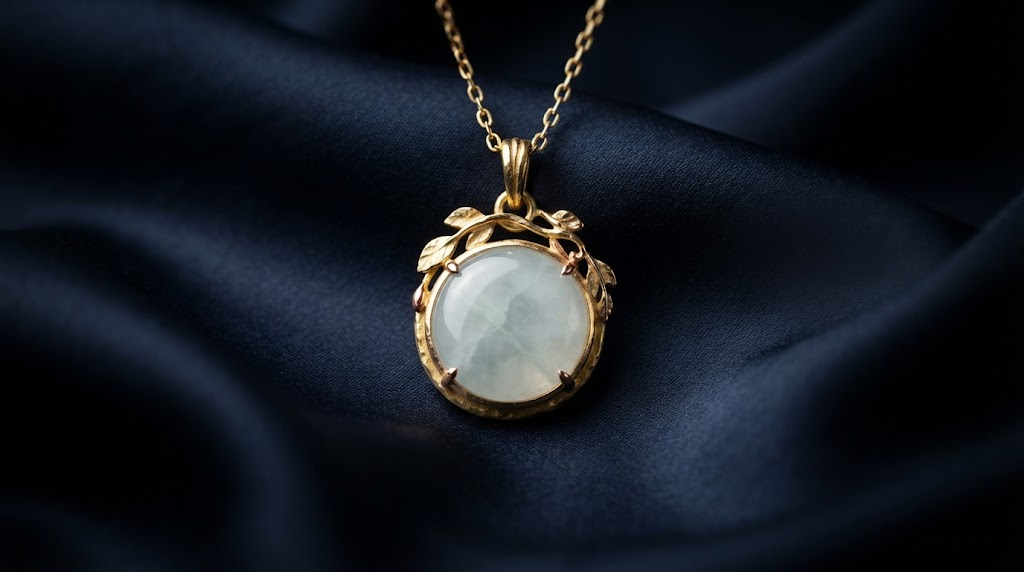
Few stones carry as much cultural weight in this region, and few are as easy to buy badly. The vocabulary is doing a lot of work, and much of it is unfamiliar.
Two minerals, one name
Jadeite and nephrite are different minerals, both called jade.
Jadeite is rarer, harder, and the source of essentially all high-value jade. The finest material, intensely green, highly translucent "imperial" jade, is among the most expensive gem materials in the world.
Nephrite is more common and historically the jade of ancient China. Tougher, typically less translucent, and much less costly.
Both are legitimately jade. They are not close in price. If a seller says only "jade", ask which.
The A, B, C grades, treatment, not quality
This is the single most important thing to understand, and it is widely misunderstood.
Grade A, natural jadeite, not chemically treated. May be polished and waxed, which is accepted. Value is retained.
Grade B, bleached with acid to remove brown staining, then impregnated with polymer resin to restore apparent solidity. Looks good initially. The resin yellows and degrades over years, and the stone can deteriorate. Worth a fraction of Grade A.
Grade C, dyed to add or intensify colour. Dye fades. Frequently combined with B treatment, giving "B+C".
These letters describe treatment, not beauty. A modest Grade A stone is a better purchase than a spectacular-looking Grade B one.
What drives value in Grade A jadeite
Colour, even, saturated green is most prized, but lavender, "icy" near-colourless, white, red and black all have markets.
Translucency, how far light travels into the stone. "Icy" jade, highly translucent and near-colourless, is very desirable and is what many contemporary pendants use.
Texture, fine, even grain reads as smooth and glassy. Coarse texture looks granular.
Evenness, patchy colour is worth less than uniform colour, though some patterning is prized in carvings.
Workmanship, for carved pieces, the carving may matter as much as the material.
The question to ask
"Is this Grade A, and do you have a certificate saying so?"
For any significant purchase, insist on a certificate from an independent gemmological laboratory. Treatment detection needs equipment, you cannot see resin impregnation by eye, and neither can most sellers.
A seller who is vague about grade, or who says grading does not matter, is telling you something.
Practical care
Jadeite is tough but not indestructible, and a hard knock on a thin carved section will break it. Avoid ultrasonic cleaners, particularly on anything that might be treated. Warm soapy water and a soft cloth is right.
Keep it away from heat and harsh chemicals, and if a piece is on a cord, check the cord periodically.
Book a complimentary design consultation at the C'Garden atelier, The MET Corporate Towers, Kuala Lumpur: 010-766 7448 · hq@cgarden.com.my
C'Garden is an independent bespoke jeweller in Kuala Lumpur. We are not affiliated with, endorsed by, sponsored by or certified by any organisation, laboratory or brand named in this article. Third-party names are used only to refer factually to those organisations and their published standards. All text and imagery in this article is original work created by C'Garden.
Reference
Gemological Institute of America. (n.d.). Gem encyclopedia. GIA. https://www.gia.edu/gem-encyclopedia
All journal entries