
How Prongs Are Retipped, and Why It Is Not Optional
Prong retipping rebuilds the worn tips that hold a stone before they fail. How prongs wear, what the repair involves, when it is needed, why it matters.
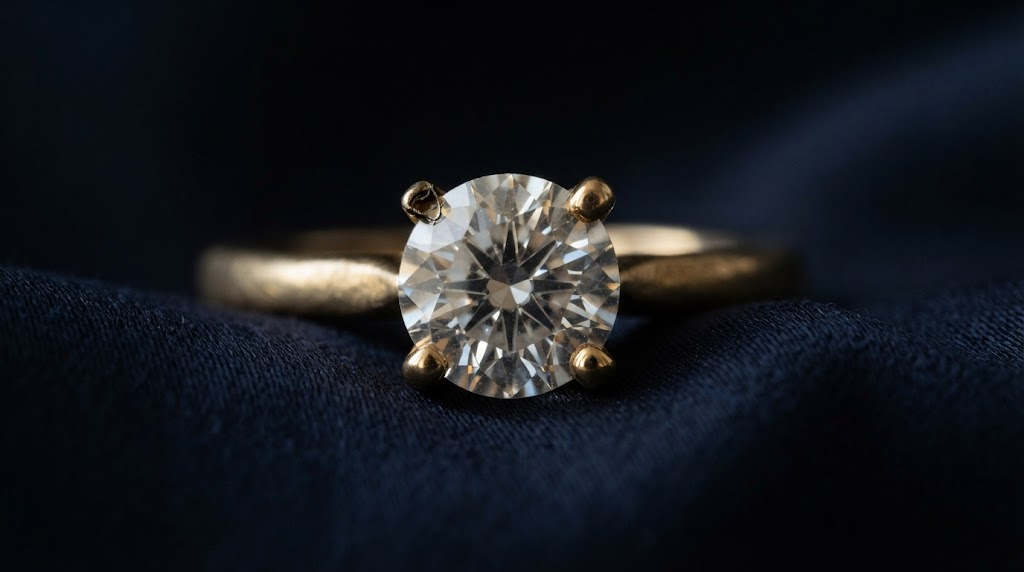
Prong retipping is the most common structural repair in jewellery and the one owners least expect to need. A prong is a small claw of metal folded over the edge of a stone. It is the highest point on the ring, so it takes the first contact with everything, and every contact removes a little metal. After enough years the tip is gone, and the stone is held by less than it was designed for.
This is how that happens, how it is fixed, and how to know when it is time.
How prongs wear
A new prong has a rounded tip that wraps over the stone's crown with a definite thickness of metal. Daily wear rubs that tip flat, then thin, then sharp. Once the metal over the stone is thinner than a sheet of paper, one knock lifts it and the stone is loose.
Rate of wear depends on the metal. 916 gold wears fastest, 750 gold more slowly, platinum slowest. A 750 solitaire worn daily typically needs attention somewhere between eight and fifteen years, though it varies enormously with the wearer.
It also depends on position. The prongs on the outside of the finger, away from the neighbouring finger, wear faster. The prongs at the top of the ring catch on sleeves and bags.
Number matters. Four prongs give no redundancy: one fails, the stone can fall. Six prongs give some margin, which is why a worn prong on a six-claw ring is often discovered before the stone is lost.
Signs that retipping is due
A prong catches on fabric. A sharp or hooked tip means the rounded top has gone.
Under a loupe the tip looks flat or has a bright, thin edge. Compare it to a prong on the less-worn side of the ring.
The stone clicks. Hold the ring to your ear and tap it gently. A stone that moves in its seat makes a faint sound.
The stone rotates. If a fingernail can turn it, it needs attention that day.
Any jeweller will check prongs for nothing. Every six months is the sensible interval for a daily ring, and after any knock hard enough to notice.
What retipping involves
The stone stays in the ring. The setter cleans the worn prong, then builds new metal onto its tip, either by soldering a tiny ball or wire of matching alloy to it, or, more commonly now, by laser welding new metal on. Laser work puts very little heat into the ring, which matters for stones that dislike heat and for rings with other stones nearby.
The new tip is then shaped, tightened over the stone, and polished to match its neighbours. A retipped prong should be indistinguishable from an original one. The process takes a skilled setter perhaps twenty minutes per prong, and rings are usually returned the same week.
When retipping is not enough
If a prong has worn most of the way down its length, not only at the tip, there is not enough to build on. The whole prong is replaced: the old one is cut away and a new one soldered or welded in. If several prongs are in that state, the entire head is replaced with a new one, and the stone is reset into it. A new head is still far cheaper than a lost stone.
Why it is not optional
A ring that has not been retipped in fifteen years of daily wear is not in a stable condition; it is waiting. Owners tend to find out on the day the stone is gone, and by then the repair has become a search, an insurance claim and a replacement stone. Retipping is a small, routine job. It is the difference between a ring that lasts a lifetime and one that lasts until the first bad knock.
Book a complimentary design consultation at the C'Garden atelier, The MET Corporate Towers, Kuala Lumpur: 010-766 7448 · hq@cgarden.com.my
C'Garden is an independent bespoke jeweller in Kuala Lumpur. We are not affiliated with, endorsed by, sponsored by or certified by any organisation, laboratory or brand named in this article. Third-party names are used only to refer factually to those organisations and their published standards. All text and imagery in this article is original work created by C'Garden.
Reference
Jewelers of America. (n.d.). Jewelry repair and care. Jewelers of America. https://www.jewelers.org/buying-jewelry/jewelry-repair-and-care
Gemological Institute of America. (n.d.). Jewelry design and manufacturing. GIA. https://www.gia.edu/jewelry-design
All journal entries