
Heated vs Unheated Sapphires: What the Premium Actually Buys
An unheated sapphire costs more than a heated one of the same look. What heating does, why it is accepted, what the premium buys, and how to tell.
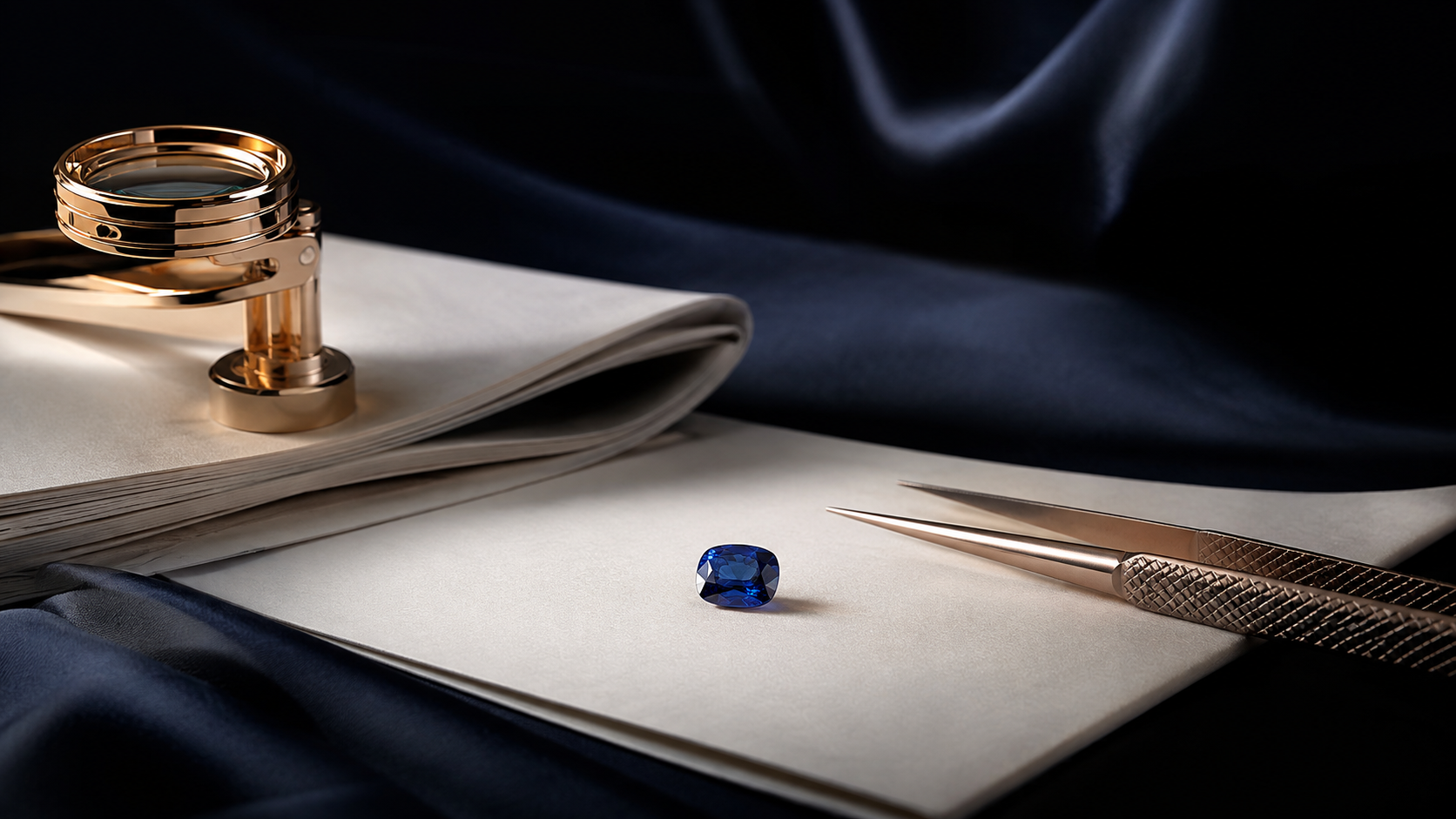
Two blue sapphires of the same size, colour and clarity can differ in price by a multiple, and the reason will be one line on a laboratory report: heated, or no indications of heating. An unheated sapphire commands a premium that surprises buyers who cannot see any difference. The difference is real, but it is a difference of rarity and history, not of beauty.
What heating does
Most sapphire is heated after mining. The rough is placed in a furnace, often at temperatures well above 1,000 degrees Celsius, for hours or days. Heat dissolves fine needle-like inclusions, deepens or evens out colour, and can lift a milky stone to transparency.
The result is a stone that is chemically and physically still sapphire. Nothing has been added. The change is permanent and stable. It does not fade, wear off or need care beyond what any sapphire needs.
Because of this, the trade treats heating as an accepted treatment. It must be disclosed, but a heated sapphire is not a lesser sapphire in any structural sense.
What "unheated" means
An unheated stone came out of the ground with its colour and clarity already good enough to cut and sell without a furnace. For fine blue that is uncommon. For the top grades of colour with high clarity, it is genuinely rare.
The premium pays for that rarity. It does not pay for a better-looking stone. A heated sapphire of good quality can look identical to an unheated one across a counter, and often looks better than an unheated stone of lower grade.
Why buyers want it anyway
Scarcity. Fine unheated material is a small fraction of supply, and collectors pay for what is scarce.
Provenance. "No heat" is a statement that the stone is as nature produced it. For some buyers that matters as a matter of principle.
Resale. Unheated stones with reports from respected laboratories hold value better in the secondary market, precisely because the premium is well understood.
Peace of mind about other treatments. A stone certified unheated has been examined closely enough that more serious treatments would have been found.
Treatments that are not the same as heating
Heating alone is accepted. Some other processes are not treated the same way and should be priced far lower.
Beryllium diffusion. Heating with an added element that penetrates the stone and changes its colour from outside in. Must be disclosed separately.
Glass filling. Fractures filled with lead glass to improve apparent clarity. The stone is fragile, and the filling can be damaged by jeweller's tools and household chemicals.
Surface dyeing or coating. Rare in sapphire, but exists.
A report that says "heated" is not the same as a report that says "heated, with residues" or "indications of diffusion". Read the whole comments section.
How anyone can tell
They cannot, by eye. A gemmological laboratory looks at inclusions under magnification and uses spectroscopy. Certain inclusions survive only if the stone was never heated; others change in recognisable ways. Advanced testing can detect diffusion and glass filling.
For any sapphire sold as unheated, insist on a report from a well-regarded independent laboratory that states the conclusion explicitly. A seller's verbal assurance is not evidence.
What to buy
For a ring worn daily, a well-cut heated sapphire of good colour is the sensible choice and the money goes into size and colour.
For a stone of significance, a gift meant to hold value, or a buyer who cares about the untouched, an unheated stone with a proper report is the right purchase, and the premium is understood by everyone who will ever value it.
Either way, the report should say what was done. That, more than the word "unheated", is what protects the buyer.
Book a complimentary design consultation at the C'Garden atelier, The MET Corporate Towers, Kuala Lumpur: 010-766 7448 · hq@cgarden.com.my
C'Garden is an independent bespoke jeweller in Kuala Lumpur. We are not affiliated with, endorsed by, sponsored by or certified by any organisation, laboratory or brand named in this article. Third-party names are used only to refer factually to those organisations and their published standards. All text and imagery in this article is original work created by C'Garden.
Reference
Gemological Institute of America. (n.d.). Sapphire quality factors. GIA. https://www.gia.edu/sapphire-quality-factor
All journal entries