
Gold-Plated, Gold-Filled and Vermeil: What the Labels Mean
Gold plated vs gold filled vs vermeil: three labels for a gold surface over another metal. How thick each layer is, how long it lasts, how to read stamps.
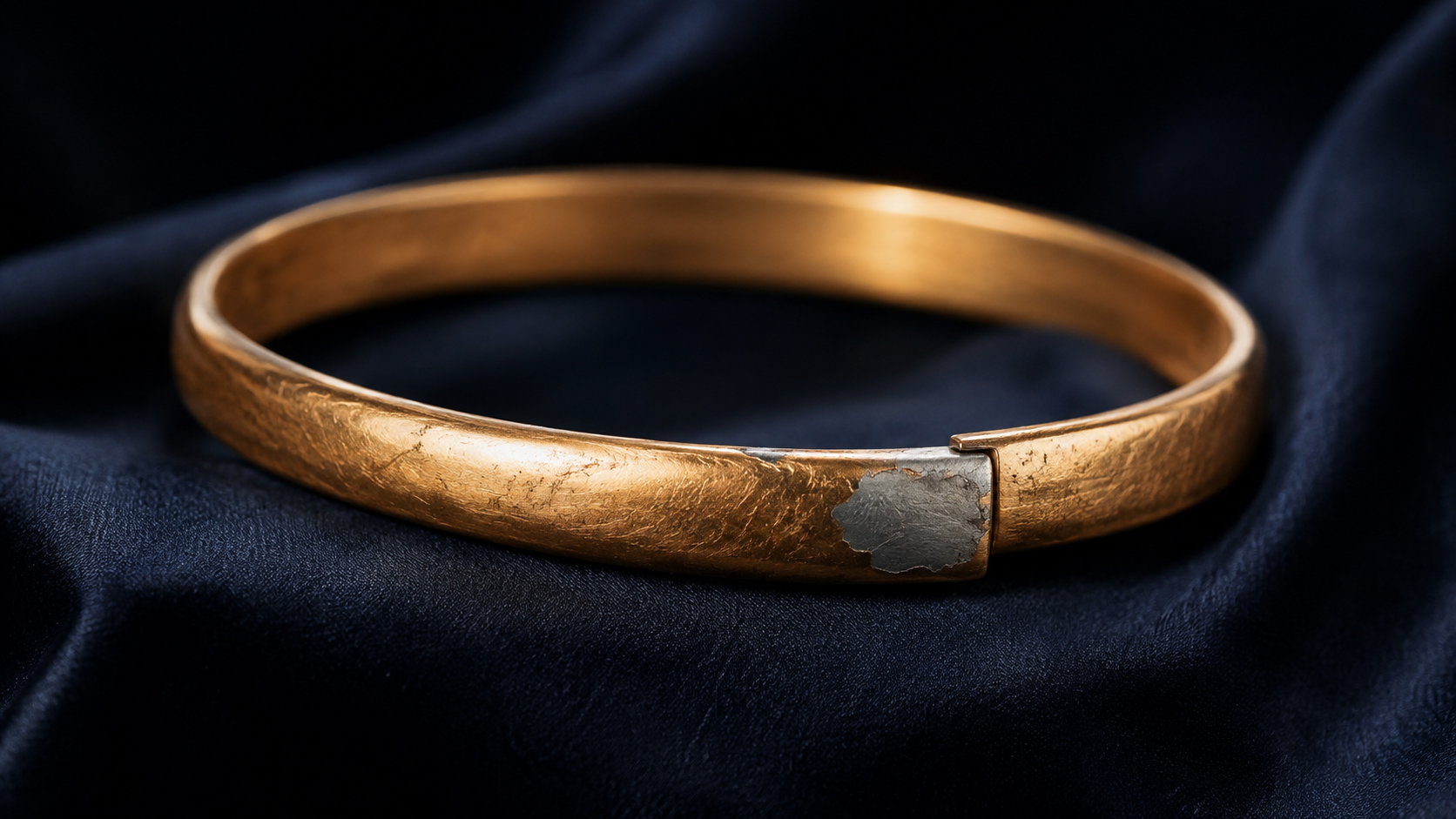
The words on a fashion jewellery tag describe how much gold is on the piece and how it got there. The gold plated vs gold filled question is really a question about thickness, and vermeil is a specific case of plating. None of the three is solid gold. Each has a sensible use and a predictable lifespan, and knowing which is which prevents a lot of disappointment.
Gold-plated
A base metal, usually brass, copper or steel, is given a coating of gold by electroplating. The gold layer is measured in microns, thousandths of a millimetre. Flash plating, used on the cheapest pieces, is under half a micron and can wear through in weeks. Better plating runs to two or three microns and lasts longer, particularly on pieces that do not rub.
What happens over time. The gold wears away at points of contact, edges, the inside of rings, the back of pendants, and the base metal shows through. Brass and copper then react with skin and sweat. The piece can be replated, but a thin layer over a piece that has already worn is a short-term fix.
Stamps. GP, GEP or HGE. Often no stamp at all.
Gold-filled
A layer of solid gold alloy is bonded to a base metal core by heat and pressure, then rolled or drawn into sheet and wire. The gold is not deposited from solution; it is a real sheet of gold mechanically joined to the base. Under the widely used American standard, the gold layer must be at least one twentieth of the piece's total weight, marked 1/20 12k GF or 1/20 14k GF.
What happens over time. The gold layer is many times thicker than plating, and pieces with reasonable care last years or decades before showing base metal. Gold-filled is a genuine mid-tier material rather than a disguise.
Limits. Because the gold is a sheet, gold-filled is made from stock wire and sheet. It cannot be cast into complex shapes, so it suits simple forms: hoops, chains, wire-wrapped settings, plain bands. Soldering repairs are tricky, since heat can expose the core.
Stamps. GF, with the fraction and karat.
Vermeil
A silver base, usually sterling, plated with gold. The word is French, and the traditional technique used fire gilding; modern vermeil is electroplated. Under the American consumer standard the gold must be at least ten karat and at least two and a half microns thick to use the name. Many countries, Malaysia included, have no legal definition, so the word is sometimes used for thin plating over silver.
What happens over time. As with any plating, the gold wears at contact points. The difference is that what shows through is silver, which is hypoallergenic for most people and does not turn skin green. The piece can be replated indefinitely, and the silver underneath has some value.
Stamps. 925 for the silver, sometimes with the word vermeil on the tag rather than the piece.
Gold plated vs gold filled: how to read a piece
Look for the fineness stamp. 750, 585, 916 and 999 mean solid gold throughout. 925 means silver, possibly plated. GF means gold-filled. GP or nothing at all usually means plated over base metal.
Weigh it in the hand. Gold is dense; a plated brass piece feels light for its size.
Check the wear points. On a used piece, the inside of a ring or the edge of a pendant will show base metal first.
Ask the seller the plating thickness in microns. A seller who does not know is selling flash plating.
Where each makes sense
Plated pieces suit fashion jewellery worn occasionally and replaced without regret. Gold-filled suits everyday basics, chains and hoops, at a price well below solid gold. Vermeil suits pieces with intricate silver work where a gold finish is wanted and replating is accepted.
For anything meant to last a lifetime, be passed on or hold value, only solid gold or platinum will do. In Kuala Lumpur's humidity, plated pieces worn daily against skin wear faster than the same pieces would in a dry climate, and that is worth remembering when the price looks too good.
Book a complimentary design consultation at the C'Garden atelier, The MET Corporate Towers, Kuala Lumpur: 010-766 7448 · hq@cgarden.com.my
C'Garden is an independent bespoke jeweller in Kuala Lumpur. We are not affiliated with, endorsed by, sponsored by or certified by any organisation, laboratory or brand named in this article. Third-party names are used only to refer factually to those organisations and their published standards. All text and imagery in this article is original work created by C'Garden.
Reference
Federal Trade Commission. (2018). Guides for the jewelry, precious metals, and pewter industries. FTC. https://www.ftc.gov/legal-library/browse/rules/jewelry-guides
All journal entries