
Gold Allergies: Usually Nickel, and What to Ask For Instead
Nickel free gold jewellery solves most so-called gold allergies. Why nickel is the usual culprit, which alloys avoid it, and what to ask a jeweller for.
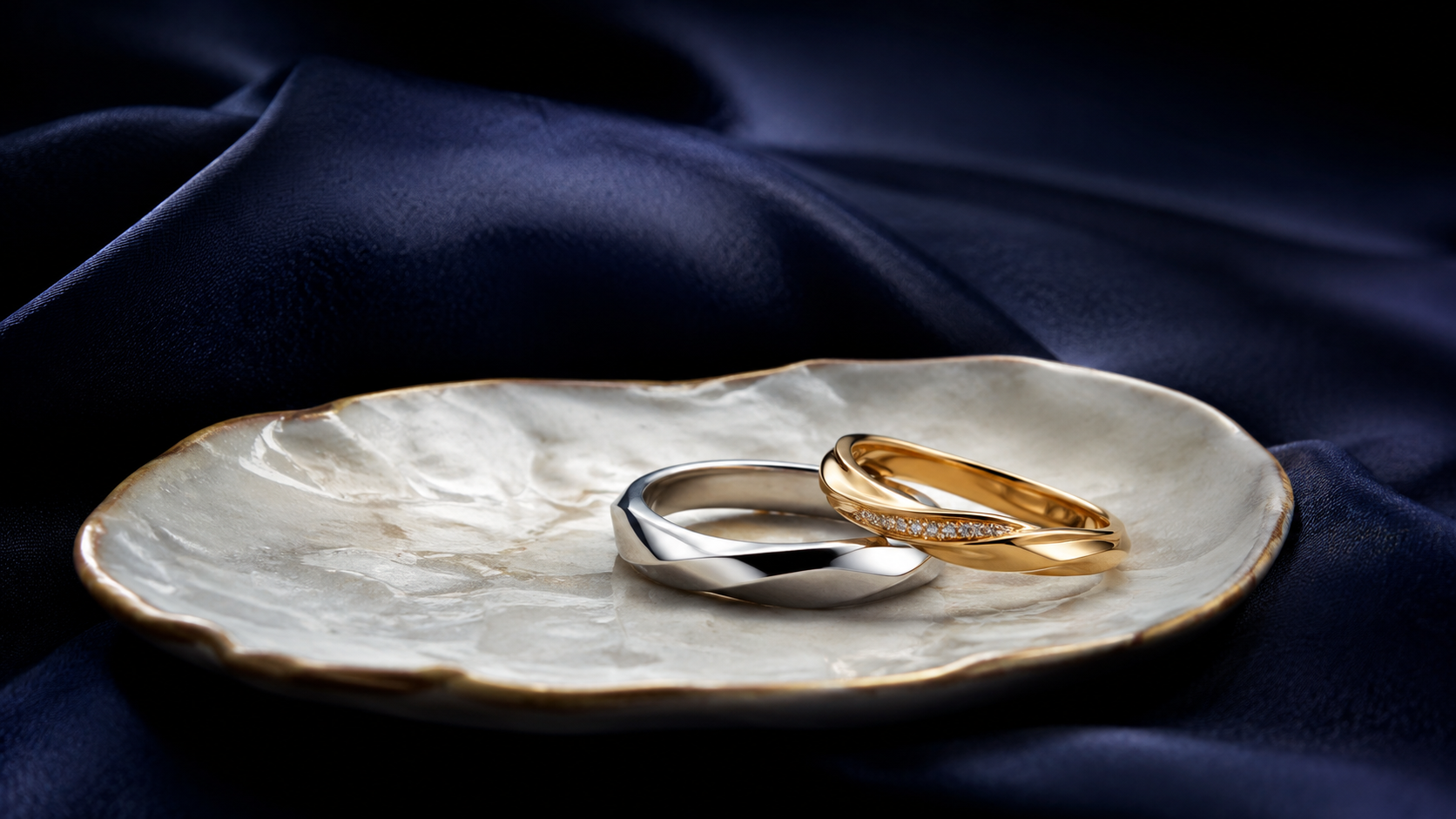
A red, itchy band of skin under a ring is common enough that many people conclude they are allergic to gold. Genuine gold allergy exists but is rare. In most cases the reaction is to nickel, a metal used in some gold alloys, and the fix is nickel free gold jewellery rather than giving up gold.
Knowing which alloys contain nickel, and which never do, makes the conversation with a jeweller short.
Why nickel is the usual culprit
Nickel is one of the most common contact allergens. Sensitisation often begins with cheap earrings, belt buckles or watch backs, and once established it is permanent. The skin reacts wherever nickel touches it for long enough, and a ring worn all day in a humid climate is the ideal test.
Sweat matters. Nickel ions leach out of an alloy faster when the surface is wet and slightly acidic. Kuala Lumpur's humidity means a ring that causes no trouble in a cooler climate can flare within weeks here.
Where nickel hides in gold
Yellow 916 and 750 gold are alloyed with copper and silver. Nickel is not a normal ingredient, and yellow gold very rarely causes nickel reactions.
White gold is the problem area. Gold is yellow, so to make it white the alloy needs a whitening metal. The two common choices are nickel and palladium. Nickel white gold is cheaper, harder and slightly whiter. Palladium white gold is softer, greyer and costs more. Both are usually rhodium plated when sold, which hides the nickel until the plating wears.
Rose gold relies on copper for its colour. Nickel is not typical, but some recipes include small amounts.
Low karat and unmarked pieces are more likely to contain nickel because it is inexpensive and hard-wearing.
Recognising a nickel reaction
Location. The rash sits exactly where the metal touches, often a clean band shape.
Timing. It appears after hours or days of wear, not immediately.
White gold ring, no problem for a year, then a rash. Classic. The rhodium plating has worn through and exposed the nickel alloy beneath.
If the reaction is instant, widespread, or accompanied by swelling, it is something else and worth a doctor's opinion.
What to ask for
Palladium white gold. Ask specifically for a nickel-free white alloy. Many bespoke jewellers can source it; some chain stores cannot.
Platinum. Naturally white, alloyed usually with a small amount of ruthenium, iridium or cobalt. Nickel is not used in standard jewellery platinum alloys. Platinum is the most reliable choice for a severe nickel allergy.
High-karat yellow gold. 916 or 750 yellow gold from a reputable maker is very unlikely to contain nickel. The higher the gold content, the less of anything else there is to react to.
Ask for the alloy, not a promise. "Hypoallergenic" is a marketing word with no fixed definition in Malaysia. "Nickel-free" is a factual claim a jeweller can stand behind and a lab can test.
What does not solve it
Rhodium plating. It works as a barrier but wears through, typically within a year or two on a ring. Re-plating restores it temporarily.
Clear nail varnish. A short-term trick that wears off in days and looks worse than the rash.
Wearing it less. The sensitisation is permanent; reduced exposure only delays the flare.
If you already own a nickel white gold ring
Options, in rough order of cost: keep it re-plated and accept a maintenance routine; have the setting transferred to a new palladium white gold or platinum shank; or set the stones into a new piece entirely. A bespoke jeweller can often reuse the stones and recover the gold value of the old alloy toward the new one.
Book a complimentary design consultation at the C'Garden atelier, The MET Corporate Towers, Kuala Lumpur: 010-766 7448 · hq@cgarden.com.my
C'Garden is an independent bespoke jeweller in Kuala Lumpur. We are not affiliated with, endorsed by, sponsored by or certified by any organisation, laboratory or brand named in this article. Third-party names are used only to refer factually to those organisations and their published standards. All text and imagery in this article is original work created by C'Garden.
Reference
Jewelers of America. (n.d.). Buying jewelry. Jewelers of America. https://www.jewelers.org/buying-jewelry
All journal entries