
GIA, IGI and the Other Labs: What the Differences Mean for Buyers
GIA vs IGI is the comparison buyers ask about most, but there are several laboratories and they are not interchangeable. What each is known for.
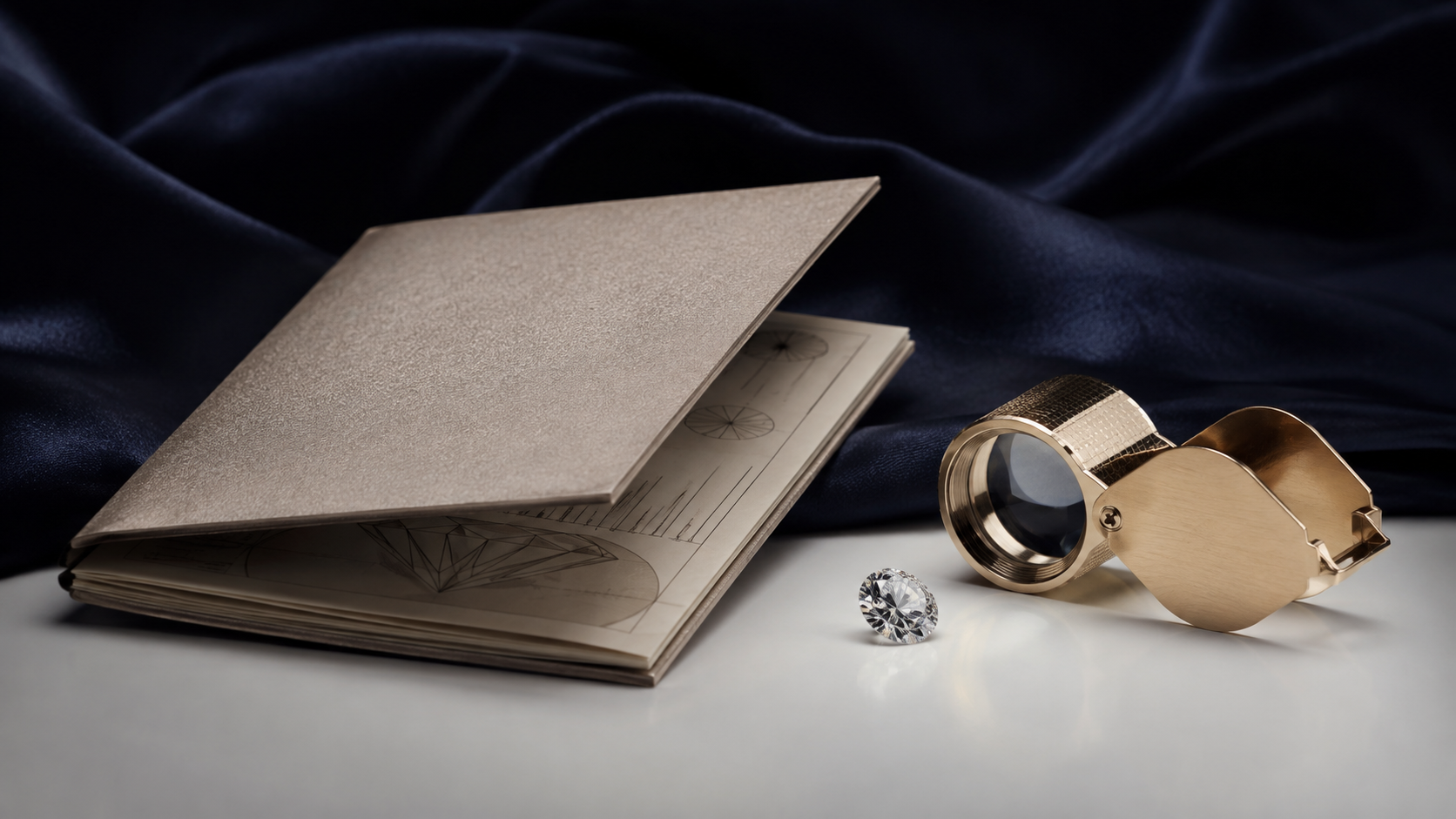
Every serious diamond comes with a report, and the name at the top of that report changes how the trade reads the grades printed on it. The gia vs igi question is the one buyers ask most, because those two laboratories grade the majority of stones sold at retail. There are others worth knowing, and the differences are practical rather than mysterious.
What a report is and is not
A grading report is an opinion, given by a laboratory on a particular day, about a stone's weight, measurements, colour, clarity, cut and fluorescence, along with a plot of inclusions and an inscription number. It is not a valuation and it is not a guarantee. Reputable laboratories call it a report for that reason, though the trade says certificate out of habit.
Grades are assigned by trained graders comparing the stone against master sets under controlled light. Two laboratories can honestly disagree by a grade, and the same laboratory can disagree with itself on a resubmission. The value of a laboratory's name is the consistency and strictness of that opinion.
The laboratories you will meet
GIA. The Gemological Institute of America is a non-profit founded in 1931. It developed the D to Z colour scale and the clarity scale that the whole industry now uses. It is widely regarded as the strictest and most consistent grader of natural diamonds, and a GIA grade is the reference against which others are judged. GIA also grades laboratory-grown diamonds, using the same scales.
IGI. The International Gemological Institute was founded in Antwerp in 1975 and has laboratories in many cities. It became the dominant grader of laboratory-grown diamonds as that market grew, and the large majority of grown stones sold today carry IGI reports. For natural diamonds, the trade has historically treated IGI grades as slightly more generous than GIA's on colour and clarity, sometimes by a grade. This is a widely held opinion rather than a published fact, and IGI's consistency has improved considerably.
HRD Antwerp. A Belgian laboratory with a long history in the European trade, respected and less often seen in Malaysia.
GCAL. A New York laboratory that guarantees its grades and provides light-performance imaging, popular with some online retailers.
AGS. The American Gem Society laboratory was known for its rigorous cut grading. It was merged into GIA in 2022, and its cut research now informs GIA's work.
SSEF and Gübelin. Swiss laboratories that specialise in coloured stones and pearls rather than diamond grading. Their reports on origin and treatment are the standard for important sapphires, rubies and emeralds.
GIA vs IGI: how the name affects what you pay
A stone graded G VS1 by GIA will usually cost more than a stone described as G VS1 on another laboratory's report. The market prices the laboratory's reputation into the grade. That is not a reason to avoid other reports; it is a reason to compare like with like. A G on one report may be an H on another, and the price should reflect that.
For laboratory-grown diamonds the picture is simpler. IGI reports are the norm, GIA reports are available, and because the stones are inexpensive the difference in price between the two is small.
Reading any report well
Verify it online. Every major laboratory has a report lookup. Enter the number and confirm that the weight and measurements match the stone in front of you.
Match the inscription. The number on the girdle should match the report. Ask the jeweller to show you under a loupe.
Check the date. Old reports are still valid, but a stone may have been chipped or recut since.
Read the comments. Treatments, clarity characteristics and unusual features appear in the comments section, in small print.
What a bespoke jeweller looks for
For a natural centre stone of any value, a GIA report, and a second opinion from our own loupe. For grown stones, IGI or GIA. For coloured stones of significance, a Swiss origin report. And for any report, a stone that matches it, because paper is only as good as the diamond it describes.
Book a complimentary design consultation at the C'Garden atelier, The MET Corporate Towers, Kuala Lumpur: 010-766 7448 · hq@cgarden.com.my
C'Garden is an independent bespoke jeweller in Kuala Lumpur. We are not affiliated with, endorsed by, sponsored by or certified by any organisation, laboratory or brand named in this article. Third-party names are used only to refer factually to those organisations and their published standards. All text and imagery in this article is original work created by C'Garden.
Reference
Gemological Institute of America. (n.d.). About GIA. GIA. https://www.gia.edu/about-gia
All journal entries