
Gemstone Treatments Every Buyer Should Know About
Most coloured stones sold today have been treated. The common gemstone treatments, which are accepted, which change the value, and what you are owed.
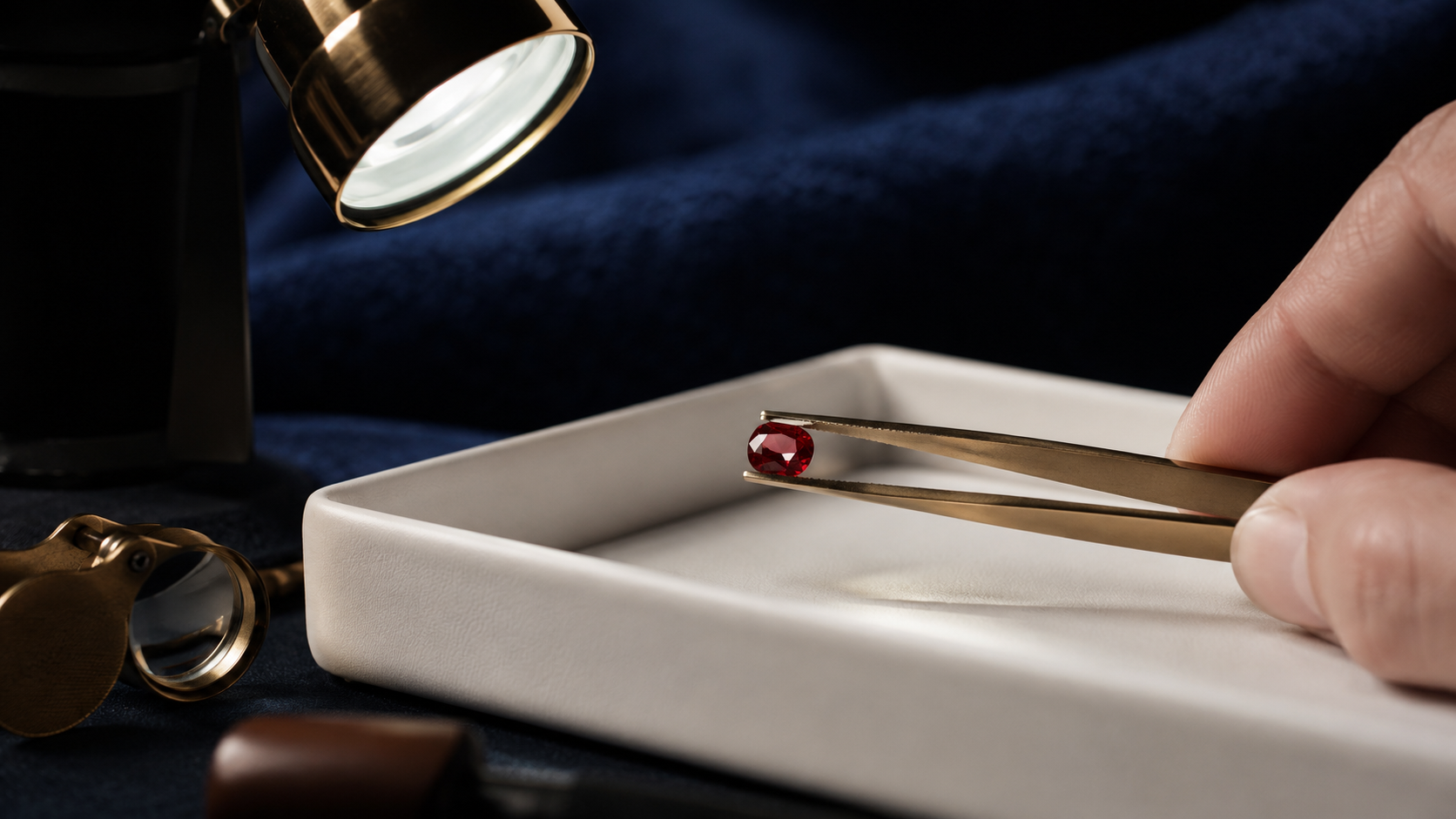
Most coloured gemstones in a jewellery shop have been altered by people before reaching the counter. That is not a scandal. Some gemstone treatments are centuries old and fully accepted by the trade. Others are recent, unstable or deceptive if undisclosed. The buyer's job is not to avoid treated stones but to know which treatment they are paying for.
The treatments considered normal
Heating. Sapphire, ruby, aquamarine, tanzanite and many others are routinely heated to improve colour or clarity. The effect is permanent and the stone is still entirely natural material. For sapphire and ruby, heating is so common that an unheated stone with fine colour carries a large premium and should come with a laboratory report stating no indications of heating.
Oiling of emerald. Emeralds are almost always fractured, and colourless oil has been used for centuries to reduce the visibility of those fractures. Oil is accepted because it is traditional and reversible. Resin fillings, which are harder to remove, are more contentious, and a report should state the degree of clarity enhancement: minor, moderate or significant.
Irradiation. Blue topaz is the obvious example. Colourless stones are irradiated and heated to create a permanent blue. Stable, widespread, and acceptable when disclosed.
The treatments that change what you are buying
Glass filling of ruby. Low-grade corundum with heavy fractures is heated with lead glass, which flows into the cracks and makes the stone look transparent. The result is a composite, not a ruby in the ordinary sense. It is soft in the filled areas, damaged by jewellery cleaners and even by heat from a jeweller's torch during resizing. Reports describe such stones as glass-filled or composite. They should be sold cheaply and never presented as ordinary heated ruby.
Diffusion. Sapphire heated with certain elements, notably beryllium, can develop colour that penetrates from the surface inwards. The colour may be shallow. Repolishing can remove it. Diffused stones are worth far less than naturally coloured material and must be disclosed.
Dyeing. Porous or fractured stones such as jade, chalcedony, pearl and low-grade ruby can be dyed. Dyes can fade or leach. In jade, the trade distinguishes untreated A jade from bleached and polymer-impregnated B jade and dyed C jade, and the difference in value is enormous.
Coating. Thin films applied to the surface, as in so-called mystic topaz or coated tanzanite. Coatings scratch and wear through. Fine for costume pieces, not for anything meant to last.
What disclosure you are owed
Trade bodies including CIBJO in its Gemstone Book and national consumer regulators require that treatments be disclosed at the point of sale. In practice, disclosure quality varies widely.
Ask directly. "Has this stone been treated, and how?" A straightforward jeweller will answer without hesitation. Silence or vagueness is itself an answer.
Read the report, not the summary. A laboratory report will carry a comments line describing treatment. Phrases such as "indications of heating", "minor clarity enhancement" or "evidence of glass filling" are what to look for.
Notice the price. If a two carat ruby is priced like a good garnet, it is a composite or the seller is confused. Either way, walk on.
How treatment affects care
Heated corundum needs no special handling. Oiled emerald should stay out of ultrasonic cleaners and away from solvents, and may need re-oiling after some years. Glass-filled ruby should not be near a torch or any acid. Dyed stones should not be soaked. If you know the treatment, you know the care.
Our position
We sell treated stones and untreated stones. We do not sell a treatment as if it were not there. When a client asks for a ruby or sapphire, we explain what heating is and what the unheated premium buys, and we let them decide with the report in front of them.
Book a complimentary design consultation at the C'Garden atelier, The MET Corporate Towers, Kuala Lumpur: 010-766 7448 · hq@cgarden.com.my
C'Garden is an independent bespoke jeweller in Kuala Lumpur. We are not affiliated with, endorsed by, sponsored by or certified by any organisation, laboratory or brand named in this article. Third-party names are used only to refer factually to those organisations and their published standards. All text and imagery in this article is original work created by C'Garden.
Reference
Gemological Institute of America. (n.d.). Gem encyclopedia. GIA. https://www.gia.edu/gem-encyclopedia
CIBJO, The World Jewellery Confederation. (n.d.). CIBJO standards. https://www.cibjo.org
All journal entries