
Everyday Rings: What Actually Survives Real Life
A ring worn every day for decades faces a specific set of enemies. The design decisions that decide whether it ages well or lives at the repairer.
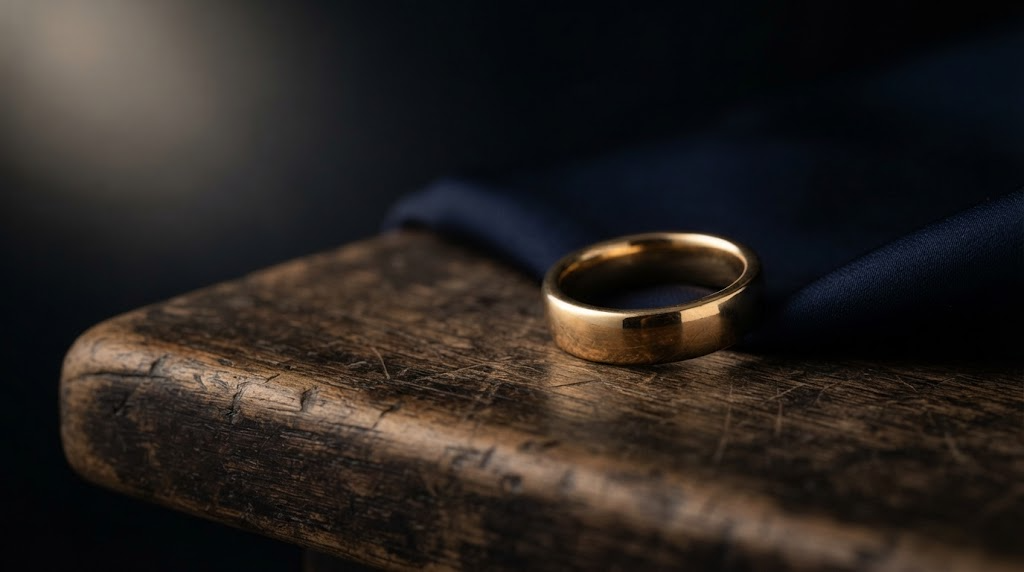
Most engagement rings are chosen in a shop, in good light, on a hand that is doing nothing. Then they are worn for thirty years while their owner opens car doors, carries shopping and works out.
The gap between those two conditions is where most repair bills come from.
What actually causes damage
Height. A stone that sits high catches on everything, sleeves, bags, door handles. Every catch is a small impact on the setting. Height is the single strongest predictor of trouble.
Exposed stone edges. The girdle of a diamond is its most vulnerable edge. A setting that leaves it proud invites chips.
Thin prongs, and too few. Four prongs on a large stone gives less redundancy than six. Thin prongs wear through faster.
Full pavé. Beautiful, and the highest-maintenance choice. Small stones held by tiny beads, all the way round, where the ring rubs against the neighbouring finger.
Very thin shanks. A delicate band looks elegant and thins further with wear. Eventually it deforms or cracks, usually at the bottom.
What ages well
Low settings. A stone set close to the finger catches far less. Bezel and low-profile prong settings are the workhorses.
Bezel setting. Metal surrounds the stone completely, protecting the girdle and presenting no snag points. The most durable common setting by a distance.
Six prongs rather than four, on anything above about half a carat.
Slightly heavier shanks. An extra half millimetre of thickness is invisible on the hand and adds years.
Harder stones. Diamond, sapphire and ruby take daily wear well. Emerald, opal, moonstone and pearl do not.
18k rather than 22k, where small stones must be held.
The compromise most people actually want
You do not have to choose between a beautiful ring and a practical one. The usual resolution is a design that is beautiful from above and sensible from the side: a stone set as low as its shape allows, protected prongs, a plain and slightly substantial band, and pavé kept off the underside.
That ring is not a compromise. It is simply designed by someone who thought about the next thirty years.
Habits worth more than any design choice
Take it off for the gym. Weights bend shanks. This is the most common single cause of a deformed ring.
Take it off for cleaning and gardening. Chemicals attack alloys; grit scratches metal and dulls stones.
Take it off at the beach and the pool. Salt and chlorine both attack gold alloys, and cold water shrinks fingers.
Have the settings checked every six months. Free at most jewellers, takes minutes, and catches a worn prong before it becomes a lost stone.
The question to ask before ordering
"If I wear this every day for twenty years, what will need attention, and how often?"
Any jeweller worth using will answer specifically.
Book a complimentary design consultation at the C'Garden atelier, The MET Corporate Towers, Kuala Lumpur: 010-766 7448 · hq@cgarden.com.my
C'Garden is an independent bespoke jeweller in Kuala Lumpur. We are not affiliated with, endorsed by, sponsored by or certified by any organisation, laboratory or brand named in this article. Third-party names are used only to refer factually to those organisations and their published standards. All text and imagery in this article is original work created by C'Garden.
Reference
Jewelers of America. (n.d.). Jewelry care. Jewelers of America. https://www.jewelers.org/buying-jewelry/jewelry-repair-and-care/jewelry-care
All journal entries