
Diamond Inclusions: Which Types Matter and Which Do Not
Not all diamond inclusions types are equal. Feathers, crystals, clouds, needles and knots explained, separating the ones that affect looks from strength.
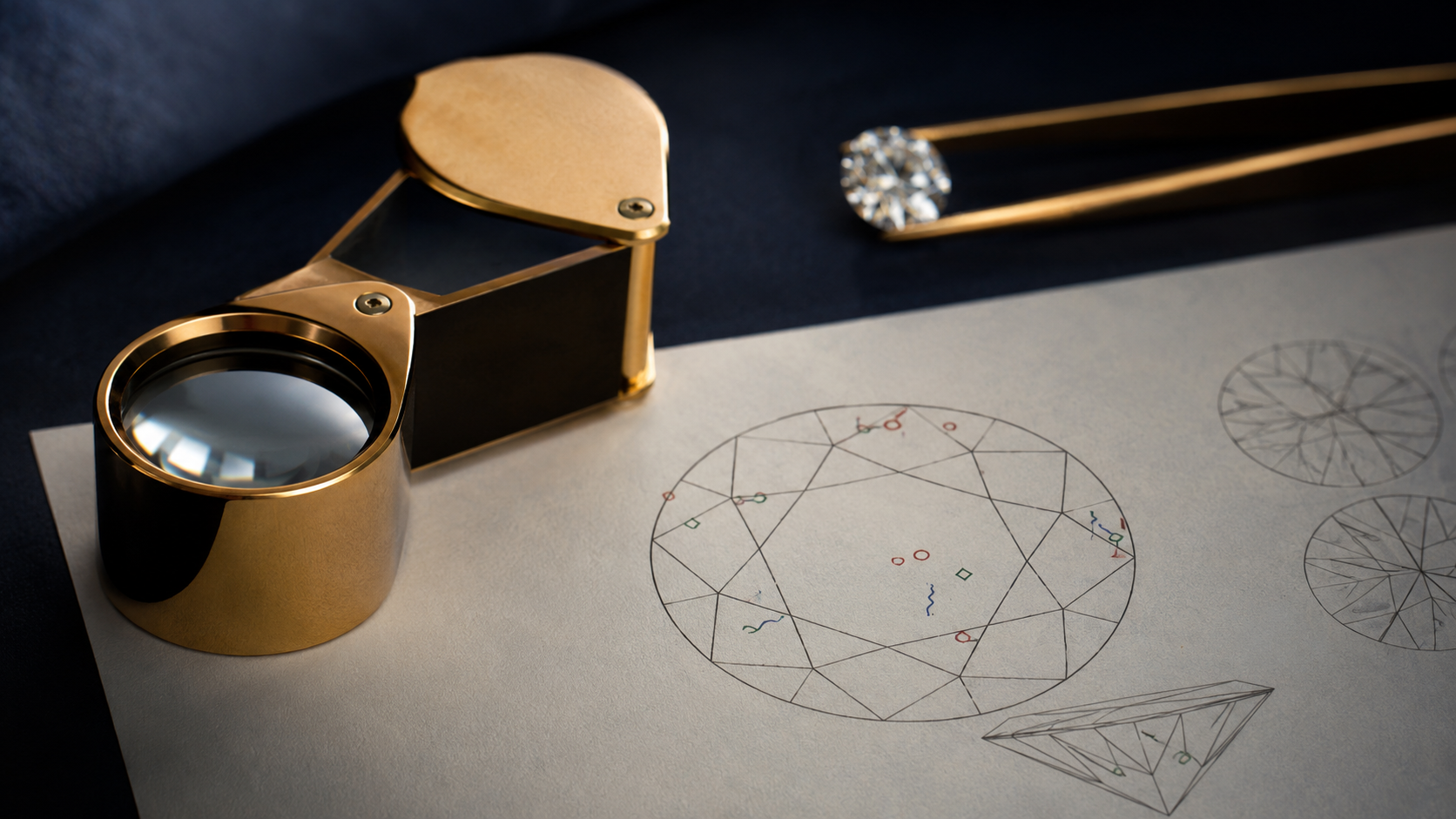
A clarity grade summarises the inclusions in a diamond as a single letter. The report's plotted diagram and comments say what they actually are, and that is where the useful information sits. The main diamond inclusions types differ in how they look, where they tend to sit and, in a few cases, whether they weaken the stone. Knowing them turns the plot from a mystery into a map.
Inclusions that are usually harmless
Pinpoints. Tiny crystals so small they appear as dots under magnification. On their own they are invisible to the eye and are the most common reason a stone is VVS rather than internally flawless.
Clouds. A group of pinpoints close together. A small cloud is harmless. A large, dense cloud can give the whole stone a faint milkiness that softens its brightness even though no single inclusion is visible. The comment "clarity grade is based on clouds that are not shown" is the warning sign for this.
Needles. Long, thin crystals. Usually white or transparent and hard to see unless they sit under the table and catch the light.
Twinning wisps. Ribbons of tiny inclusions along a plane where the crystal changed its growth direction. Common in fancy shapes cut from twinned rough. Typically pale and forgiving.
Feathers, small and pale. A feather is a small internal fracture that looks like a wisp of white. Most feathers are harmless. The exceptions are covered below.
Naturals and indented naturals. A patch of the original crystal skin left on the girdle. Purely cosmetic, usually invisible once set, and sometimes a sign that the cutter was careful to keep weight.
Inclusions that affect appearance
Crystals, dark. A crystal is a mineral grain trapped inside the diamond. White or transparent crystals behave like pinpoints. Dark crystals, often garnet or graphite, are the inclusions most likely to be seen with the naked eye, because they contrast with the bright facets around them. A dark crystal under the table is the single most common reason an SI stone is not eye clean.
Large clouds. As above; the milkiness matters more than the plot suggests.
Graining. Internal lines from irregular crystal growth. Usually invisible, but heavy graining can give a stone a hazy or slightly oily look that the eye registers without being able to say why.
Inclusions that can affect durability
Diamond is hard but not indestructible, and a small number of inclusion types matter for strength, not just looks.
Feathers that reach the surface. A feather that breaks the surface, especially at the girdle or a corner, is a starting point for a larger fracture if the stone is struck. The plot will show it at the edge; the comments may note it. On a princess or pear, a surface-reaching feather near the point is a real concern.
Feathers with stress marks. Occasionally a feather is surrounded by faint iridescence or a visible tension pattern. That indicates internal stress and is a reason to prefer another stone.
Knots. A crystal that reaches the surface, so that part of it is exposed on a facet. The boundary between the knot and the diamond is a weak point and can catch or lift during polishing or wear.
Cavities. A small hole where a crystal fell out during polishing. It collects dirt and, if deep, weakens the area around it.
Chips. Already missing material, usually at the girdle. Small chips are common on older stones. They should be noted and, if the stone is being reset, considered when placing prongs.
Reading the plot
Red marks on a laboratory plot are internal inclusions; green marks are surface blemishes. Marks in the centre of the table are the ones to take seriously. Marks near the girdle are usually hidden by the setting and often protected by it as well.
A plot shows the main inclusions, not necessarily all of them. The comment field covers the rest.
The practical rule
For appearance, worry about dark crystals under the table and large clouds. For durability, worry about anything that reaches the surface, especially at an edge or a point. Everything else is a reason the stone is affordable, not a reason to avoid it.
Book a complimentary design consultation at the C'Garden atelier, The MET Corporate Towers, Kuala Lumpur: 010-766 7448 · hq@cgarden.com.my
C'Garden is an independent bespoke jeweller in Kuala Lumpur. We are not affiliated with, endorsed by, sponsored by or certified by any organisation, laboratory or brand named in this article. Third-party names are used only to refer factually to those organisations and their published standards. All text and imagery in this article is original work created by C'Garden.
Reference
Gemological Institute of America. (n.d.). Diamond clarity. GIA. https://www.gia.edu/diamond-clarity
All journal entries