
Caring for Gemstone and Pearl Jewellery
Gold is forgiving. Gemstones and pearls are not. Which stones can be cleaned safely, which must never go near an ultrasonic cleaner, and the rules that prevent damage.
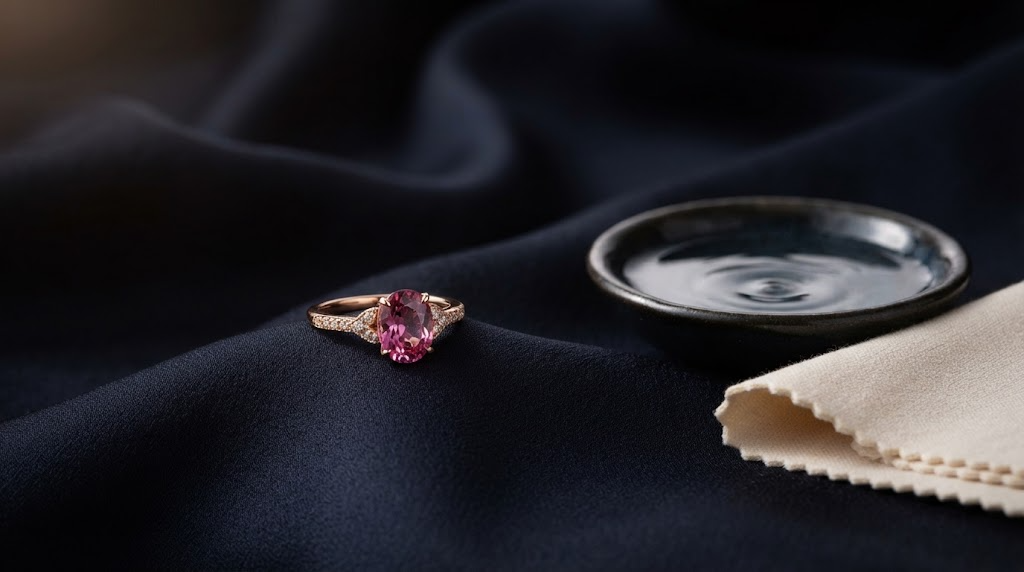
Most jewellery care advice is written for gold and diamond, both of which are robust. Apply the same routine to a pearl or an emerald and you will damage it.
The single most important rule
Jewellery goes on last, and comes off first.
On last, after perfume, hairspray, sunscreen and lotion have dried. Off first, before cleaning, swimming or the gym.
This one habit prevents most of the damage we see.
The safe universal method
Warm water, a few drops of mild dish soap, a soft brush, thorough rinsing, complete drying with a soft cloth.
This is safe for gold, diamond, sapphire and ruby. It is the default.
Where it is not safe
Pearls. Soft and porous. Never soak, never use detergent, never use an ultrasonic cleaner. Wipe with a soft, slightly damp cloth after wearing. Pearls also need a little humidity, stored bone dry for years, nacre can craze.
Opal. Contains water, and can craze if dried out or exposed to sudden temperature change. Never ultrasonic. Wipe only.
Emerald. Typically included and often treated with oil or resin to improve appearance. Ultrasonic cleaning and heat can drive that treatment out and expose fractures. Warm soapy water briefly, then dry.
Turquoise, coral, amber, malachite. All porous or soft. Wipe only, and keep away from solvents, perfume and heat.
Glass-filled ruby. Can be damaged by ordinary jewellery repair, ultrasonic cleaning, even acidic household liquids. If your ruby was inexpensive for its size, ask before cleaning it.
Ultrasonic cleaners: the honest position
They work extremely well on gold and diamond, and they destroy soft, porous, fractured or treated stones.
Unless you know exactly what is in your piece and how it was treated, do not use one at home. The convenience is not worth the risk, and the damage is usually irreversible.
Storage
Separate compartments. Diamond scratches everything softer, which is everything. Pearls and opals prefer soft pouches rather than airtight boxes.
Keep pieces out of the bathroom, humidity affects clasps, and temperature swings affect opals.
What to check twice a year
Whatever the material: prongs, clasps, and movement in the stones. Tap gently near the setting and listen. A stone that clicks is loose, and a loose stone becomes a lost one.
For coloured stones this matters more, not less. Many are softer than diamond and chip more readily once movement begins.
Frequently asked questions
Can I clean pearls with soapy water?
Only a barely damp cloth. Never soak them.
Is an ultrasonic cleaner safe?
For gold and diamond, yes. For most coloured stones and all pearls, no.
How do I clean an emerald?
Briefly in warm soapy water, then dry. Never ultrasonic or steam.
Why did my opal crack?
Most likely drying out or a sudden temperature change.
Book a complimentary design consultation at the C'Garden atelier, The MET Corporate Towers, Kuala Lumpur: 010-766 7448 · hq@cgarden.com.my
C'Garden is an independent bespoke jeweller in Kuala Lumpur. We are not affiliated with, endorsed by, sponsored by or certified by any organisation, laboratory or brand named in this article. Third-party names are used only to refer factually to those organisations and their published standards. All text and imagery in this article is original work created by C'Garden.
Reference
Gemological Institute of America. (n.d.). Tips on caring for jewelry. GIA. https://www.gia.edu/gia-news-research-tips-caring-jewelry
All journal entries