
Building a Jewellery Wardrobe, One Piece at a Time
Which pieces to buy first, what actually gets worn, and how to build a small collection that works together rather than a drawer of unrelated purchases.
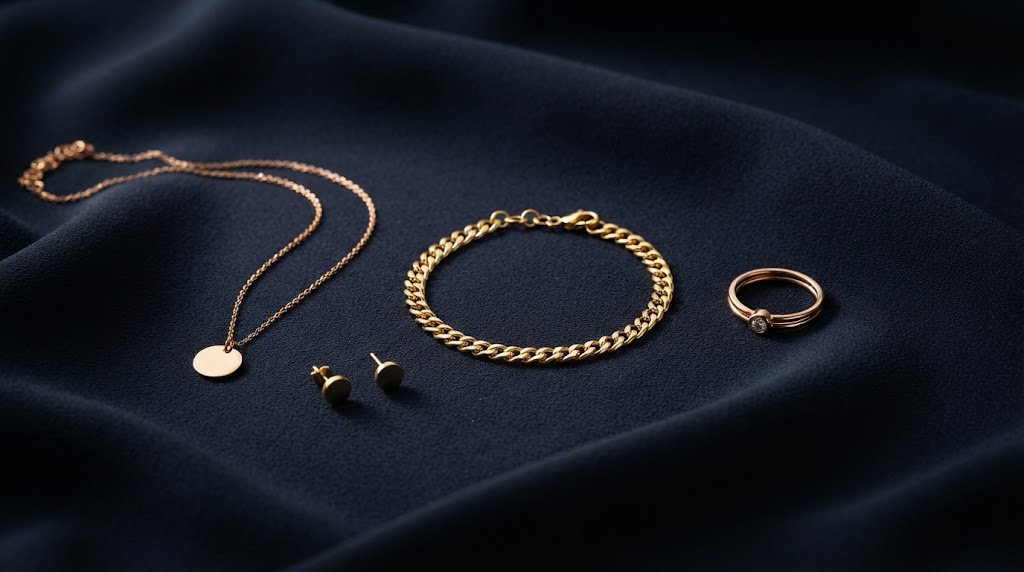
Most jewellery is bought one occasion at a time, which is how people end up with a drawer of individually nice pieces that do not work together and mostly go unworn.
A wardrobe is built differently.
Start with what you wear every day
Not what you would wear to a wedding. What goes on without thought on a Tuesday.
For most people that is one or two pieces: a bracelet, a fine chain, small earrings. These earn their cost faster than anything else, and they are worth buying properly.
The test: would you wear it to work, to dinner, and on holiday? If yes, it belongs in the first purchase.
The order we would suggest
1. One everyday piece, well made. A fine bracelet or chain in 916 gold. Neutral, adjustable, comfortable.
2. Earrings you can sleep in. Small studs or hoops. Worn more than anything else.
3. A second bracelet or chain that layers with the first. This is where a wardrobe starts behaving like one, two pieces that work alone and together are more useful than two unrelated pieces.
4. One piece with meaning. A birthstone, an engraving, a remodelled inheritance. This is the piece that gets kept.
5. One occasion piece. Only now. It will be worn least, so it should be bought last.
The principles that make a collection cohere
Commit to a metal. Mixing metals is entirely acceptable, but a collection built mostly in one tone layers more easily. Rose gold flatters the widest range of skin tones, which is why we build in it.
Buy fewer, better. One well-made piece worn for twenty years costs less per wear than three that rotate out in two.
Adjustable beats fitted for anything worn daily, particularly in this climate.
Consider how pieces sit together. Two bracelets of similar width look intentional. Two of very different scale look accidental.
What to avoid early
Buying an occasion piece first. It is the most expensive and the least worn.
Matching sets. They date faster than individual pieces and rarely get worn together.
Anything that needs a decision each morning. Jewellery that requires thought gets left in the drawer.
The uncomfortable truth about frequency
The most expensive piece in most collections is not the most worn. Cost per wear is a genuinely useful measure and almost nobody applies it.
A modest bracelet worn five days a week for a decade is a better purchase, by every measure except price, than a substantial piece worn four times a year.
Frequently asked questions
What should I buy first?
Something you will wear daily, made properly.
How many pieces do I actually need?
Most people wear three or four regularly, whatever they own.
Should everything match?
No, but a consistent metal tone makes layering easier.
Is it better to save for one good piece?
Usually yes, if it is a piece you will wear often.
Book a complimentary design consultation at the C'Garden atelier, The MET Corporate Towers, Kuala Lumpur: 010-766 7448 · hq@cgarden.com.my
C'Garden is an independent bespoke jeweller in Kuala Lumpur. We are not affiliated with, endorsed by, sponsored by or certified by any organisation, laboratory or brand named in this article. Third-party names are used only to refer factually to those organisations and their published standards. All text and imagery in this article is original work created by C'Garden.
Reference
Jewelers of America. (n.d.). Jewelry buying guides. Jewelers of America. https://www.jewelers.org/buying-jewelry/jewelry-buying-guides
All journal entries