
Bringing Your Own Stone to a Bespoke Jeweller
Most jewellers will set a stone you supply. What they need to know first, what they will not promise, and the one conversation to have before work starts.
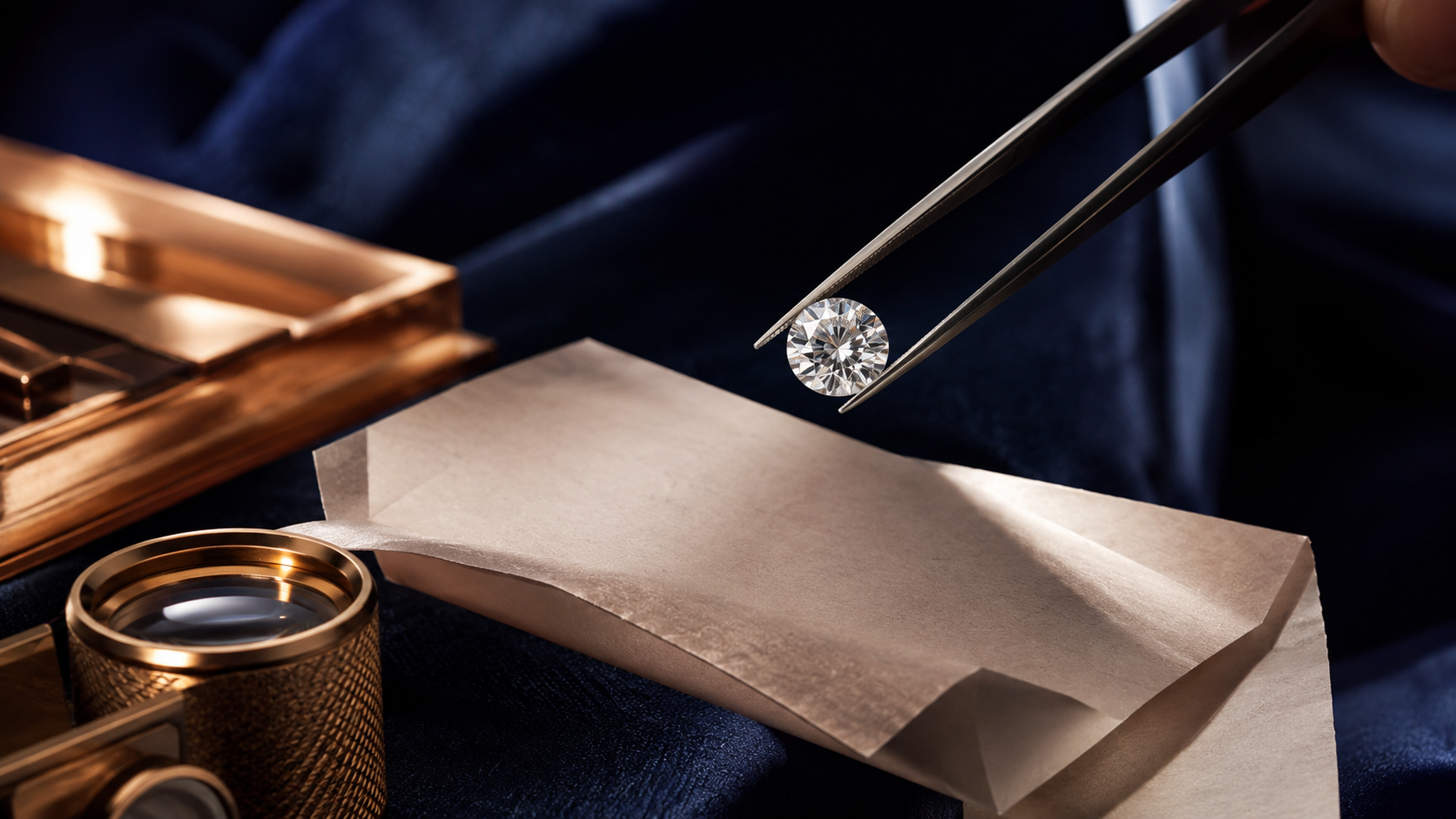
Inherited stones, stones from a ring nobody wears, stones bought loose on a trip. They are among the best reasons to commission something, and they come with a specific set of practicalities.
Yes, it can usually be done
Setting a client's own stone is normal work. The design is built around the stone's actual measurements rather than a catalogue size, which is the whole point of bespoke.
What we need before designing
Measurements, not just carat weight. Two one-carat stones can have noticeably different diameters depending on how they are cut. The setting is built to the millimetre, so the stone gets measured before anything is drawn.
A report, if one exists. Not for value, for facts. Dimensions, shape, and any treatment noted.
An honest look under magnification. This is the important one, and it is where the conversation can become uncomfortable.
The chipped-girdle conversation
Older stones, particularly ones that have been in daily-wear rings for decades, frequently have small chips or abrasions around the girdle. Often invisible to the naked eye and completely harmless where they are.
They matter at setting, because setting applies force. A stone with an existing girdle chip can extend that chip when a prong is pushed over it.
Any competent jeweller will tell you this before starting and ask you to accept the risk. If a jeweller inspects your inherited stone and mentions no risk at all, ask directly whether they looked at the girdle under magnification.
This is also why most jewellers will not insure a client-supplied stone against breakage during setting. It is not evasion, the stone's history is unknown, and the risk cannot be priced.
What it does and does not save
It saves the cost of the stone, which on a diamond ring is usually the largest single line.
It does not make the job cheaper to make. A setting built to one specific stone often takes more time than a standard one, not less. Expect to pay normal design, casting, finishing and setting charges.
If you are reusing an entire old ring
The gold can often be credited or reused, though old alloy is usually refined rather than recast directly, decades-old metal contains work hardening and contamination that can cause porosity.
Ask for the old setting back afterwards if it has sentimental value. Once the stone is out, the mount is easily lost, and people regret this more often than they expect.
Book a complimentary design consultation at the C'Garden atelier, The MET Corporate Towers, Kuala Lumpur: 010-766 7448 · hq@cgarden.com.my
C'Garden is an independent bespoke jeweller in Kuala Lumpur. We are not affiliated with, endorsed by, sponsored by or certified by any organisation, laboratory or brand named in this article. Third-party names are used only to refer factually to those organisations and their published standards. All text and imagery in this article is original work created by C'Garden.
Reference
Jewelers of America. (n.d.). Diamond grading reports. Jewelers of America. https://www.jewelers.org/buying-jewelry/jewelry-buying-guides/diamond-buying-guide/diamond-grading-reports
All journal entries